 Planets in Houses
Sun in the Third House: What It Means
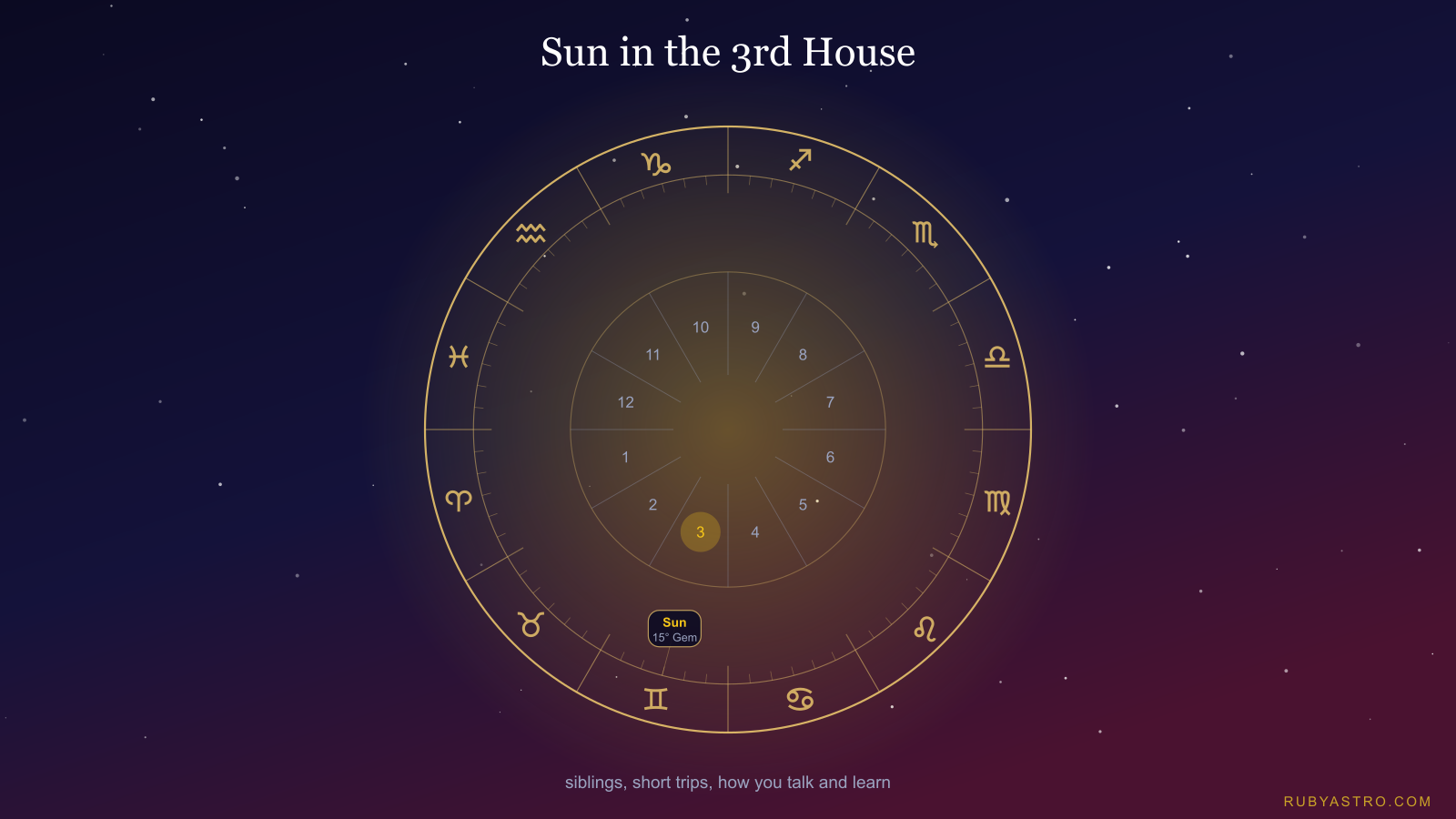
Sun in the third house puts identity and purpose into the department of communication and siblings. Here is what it does, where it strains, and which sign that means for your rising sign.
Spiritual Practice
The third eye chakra governs intuition, clarity, seeing, sits at the eyes, forehead, sleep, and is coloured indigo. What it is reached for, the practice attached to it, and an honest account of how old the seven-chakra model actually is.
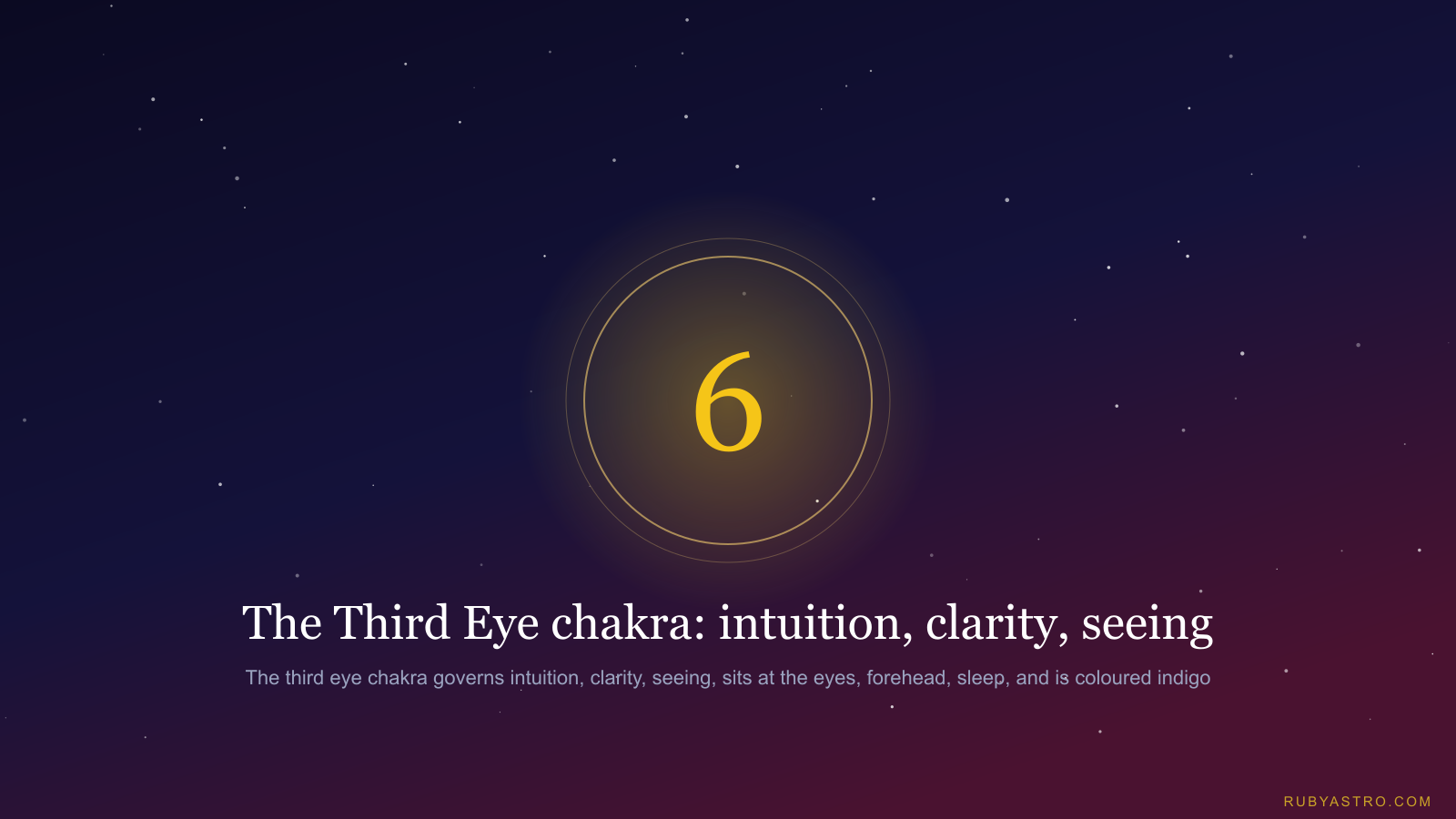
Intuition, clarity, seeing. In the seven-chakra system this is the 6th of seven centres running from the base of the spine to the top of the head, and each is assigned an area of experience and a colour.
It is located at the eyes, forehead, sleep, and the colour attached to it is indigo. The colours run in spectrum order from red at the base to violet at the crown, which is worth knowing because that ordering is a twentieth-century Western addition rather than part of the original system.
The circumstances usually described: you cannot tell what you think, or you have stopped trusting your own read on a situation. That is the practical version of what a blocked third eye chakra is supposed to feel like, stripped of the energetic language.
And the practice: less input. Silence, screens off, and time alone long enough to be bored. Notice that every one of those is a reasonable thing to do in that situation regardless of whether chakras exist, which is close to the whole of the honest case for the system.
| Governs | Intuition, clarity, seeing |
| Location | Eyes, forehead, sleep |
| Colour | Indigo |
| Reached for when | You cannot tell what you think, or you have stopped trusting your own read on a situation |
| Usual practice | Less input. Silence, screens off, and time alone long enough to be bored |
Worth being accurate about, because the usual account is wrong in a specific and interesting way. Chakras appear in Indian tantric and yogic texts from around the eighth century onward, as part of a system of subtle anatomy used in meditation practice. That much is genuinely old.
The version almost everybody in the West uses, with exactly seven centres in rainbow order, is not. Different texts describe four, five, six, nine, twelve or more, in different places, with different attributes and no colour scheme. The seven-and-rainbow model was assembled in the early twentieth century, largely through a 1919 translation by Arthur Avalon and then through theosophical writing that followed it.
So the practice is old and the diagram on the poster is about a hundred years old. Both of those are worth knowing, and almost no page selling you a chakra course will tell you the second one.
It does not, historically. Chakras come out of Indian tantric practice and Western astrology comes out of Hellenistic Greece, and the two were put side by side relatively recently by writers who liked both. Anybody giving you a firm mapping of planets to chakras is presenting a modern invention as a tradition.
In the system it governs intuition, clarity, seeing, and it is located at the eyes, forehead, sleep.
The circumstances usually described are you cannot tell what you think, or you have stopped trusting your own read on a situation. There is no measurement for it; it is a description you either recognise or do not.
Indigo, in the modern Western version. The colour scheme is about a century old rather than part of the original system.
There is no anatomical structure corresponding to one. The practice is an old framework for attending to different parts of experience, and that is a different claim from a physical one.
RubyAstro writes about astrology for reflection and self-understanding. Nothing here is medical, legal or financial advice, and none of it is a prediction of events. Read our full disclaimer.
Planets in HousesSun in the third house puts identity and purpose into the department of communication and siblings. Here is what it does, where it strains, and which sign that means for your rising sign.
 Planets in Houses
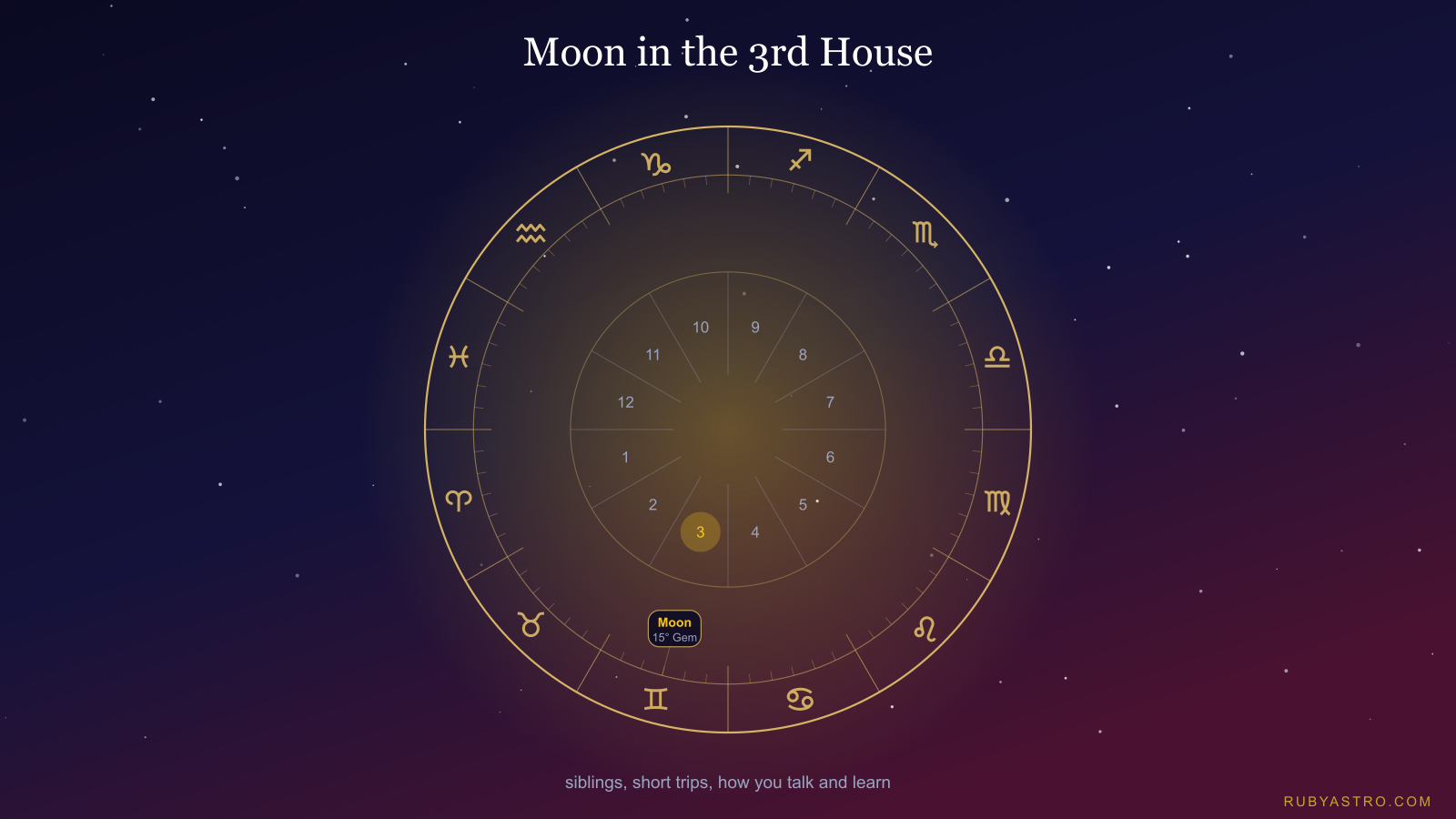
Moon in the third house puts feelings, needs and home into the department of communication and siblings. It is also the house Moon traditionally rejoices in. Here is what it does, where it strains, and which sign that means for your rising sign.
 Planets in Houses
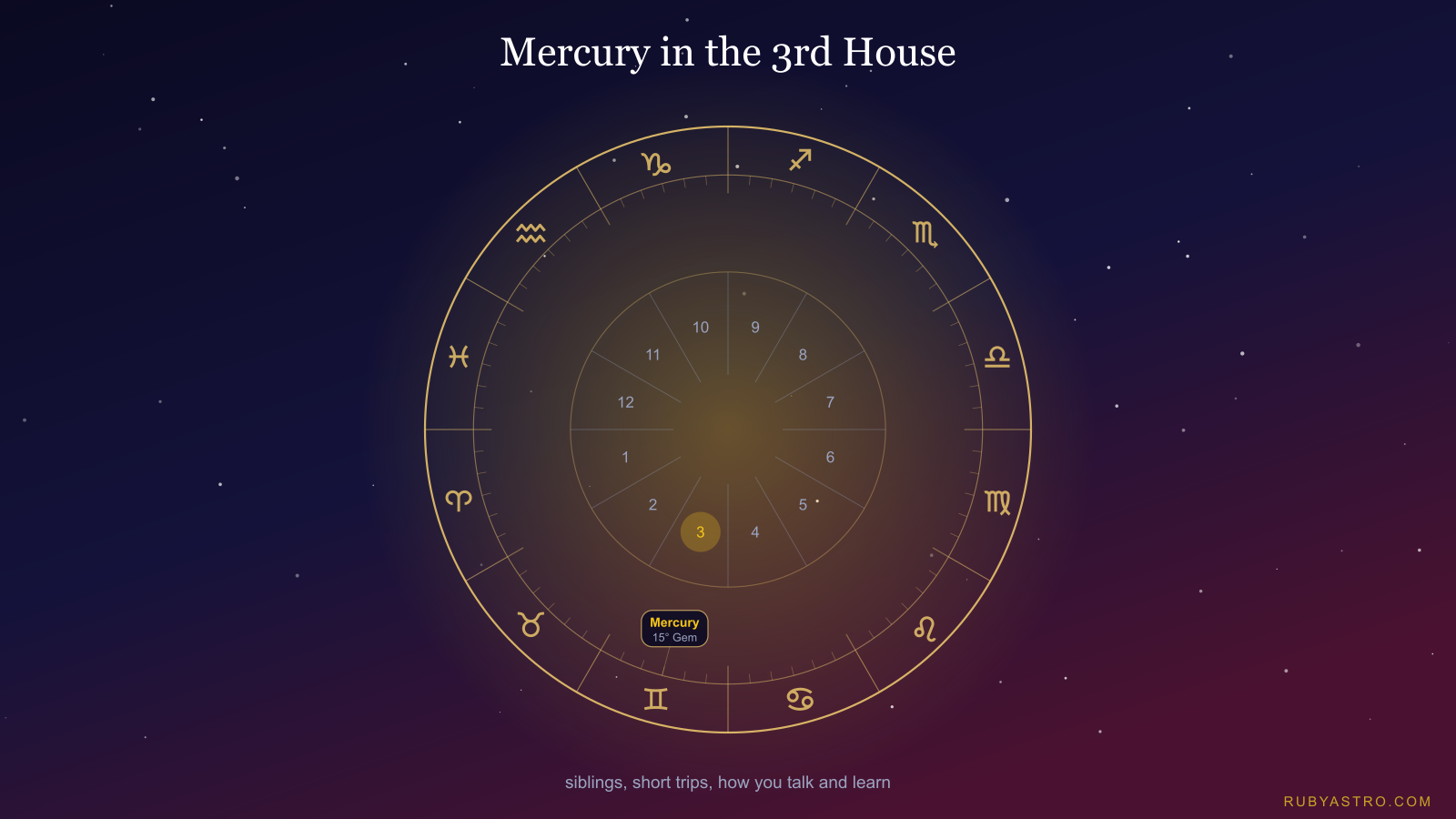
Mercury in the third house puts thinking, speaking and learning into the department of communication and siblings. Here is what it does, where it strains, and which sign that means for your rising sign.
 Spiritual Practice
The root chakra governs safety, money, belonging, sits at the legs, feet, base of the spine, and is coloured red. What it is reached for, the practice attached to it, and an honest account of how old the seven-chakra model actually is.
 Spiritual Practice
The sacral chakra governs pleasure, creativity, feeling, sits at the hips, lower abdomen, reproductive system, and is coloured orange. What it is reached for, the practice attached to it, and an honest account of how old the seven-chakra model actually is.
 Spiritual Practice
The crown chakra governs meaning, connection, faith, sits at the top of the head, nervous system, and is coloured violet. What it is reached for, the practice attached to it, and an honest account of how old the seven-chakra model actually is.