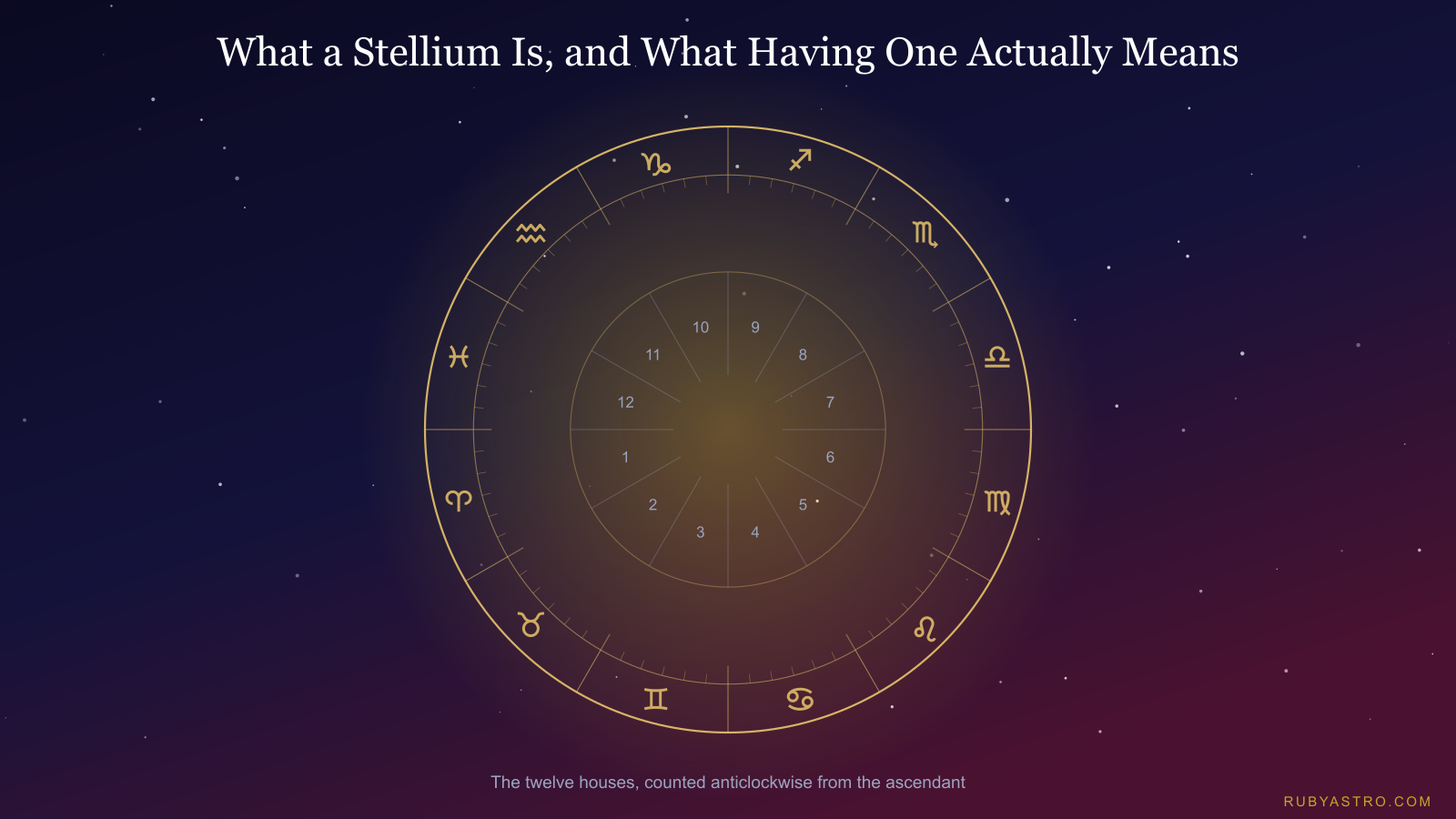
A house system is a method of dividing a chart into twelve. Whole sign gives each house one entire sign and is the oldest; Placidus divides by time and is the modern default. They often put...
The RubyAstro TeamPublished September 7, 2026Dates checked September 7, 20263 min read
House Systems
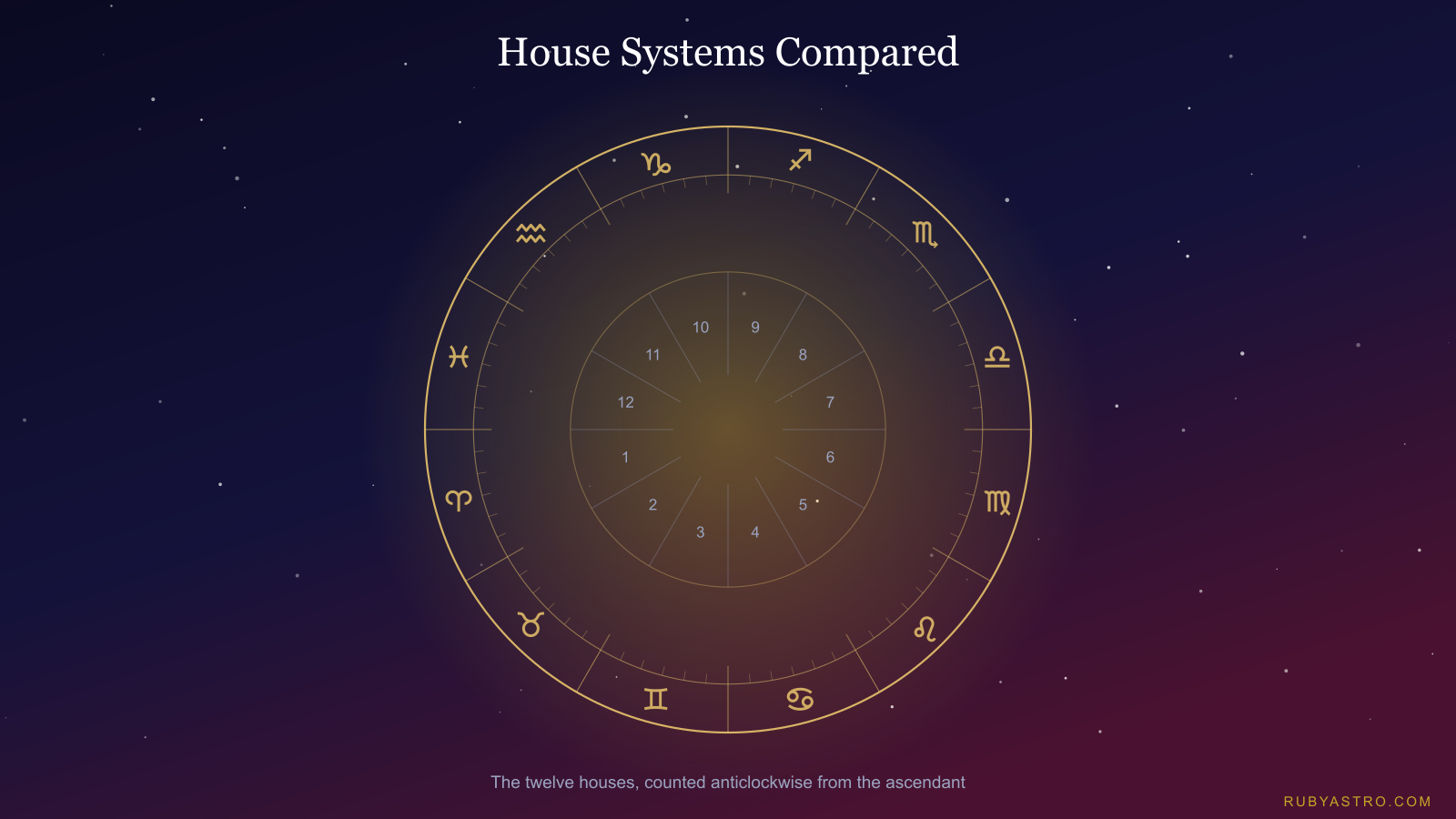
The short answerA house system is a method of dividing a chart into twelve. Whole sign gives each house one entire sign and is the oldest; Placidus divides by time and is the modern default. They often put planets in different houses, and no experiment has settled which is right.
Why there is more than one
Because dividing a sphere into twelve has several defensible answers. You can divide the ecliptic, the celestial equator, or the time it takes a degree to rise. Each choice gives a different set of house boundaries and each has been standard somewhere.
This is a genuine open problem rather than a detail. Two reputable astrologers using different systems will put your Sun in different houses and both will defend it.
Whole sign
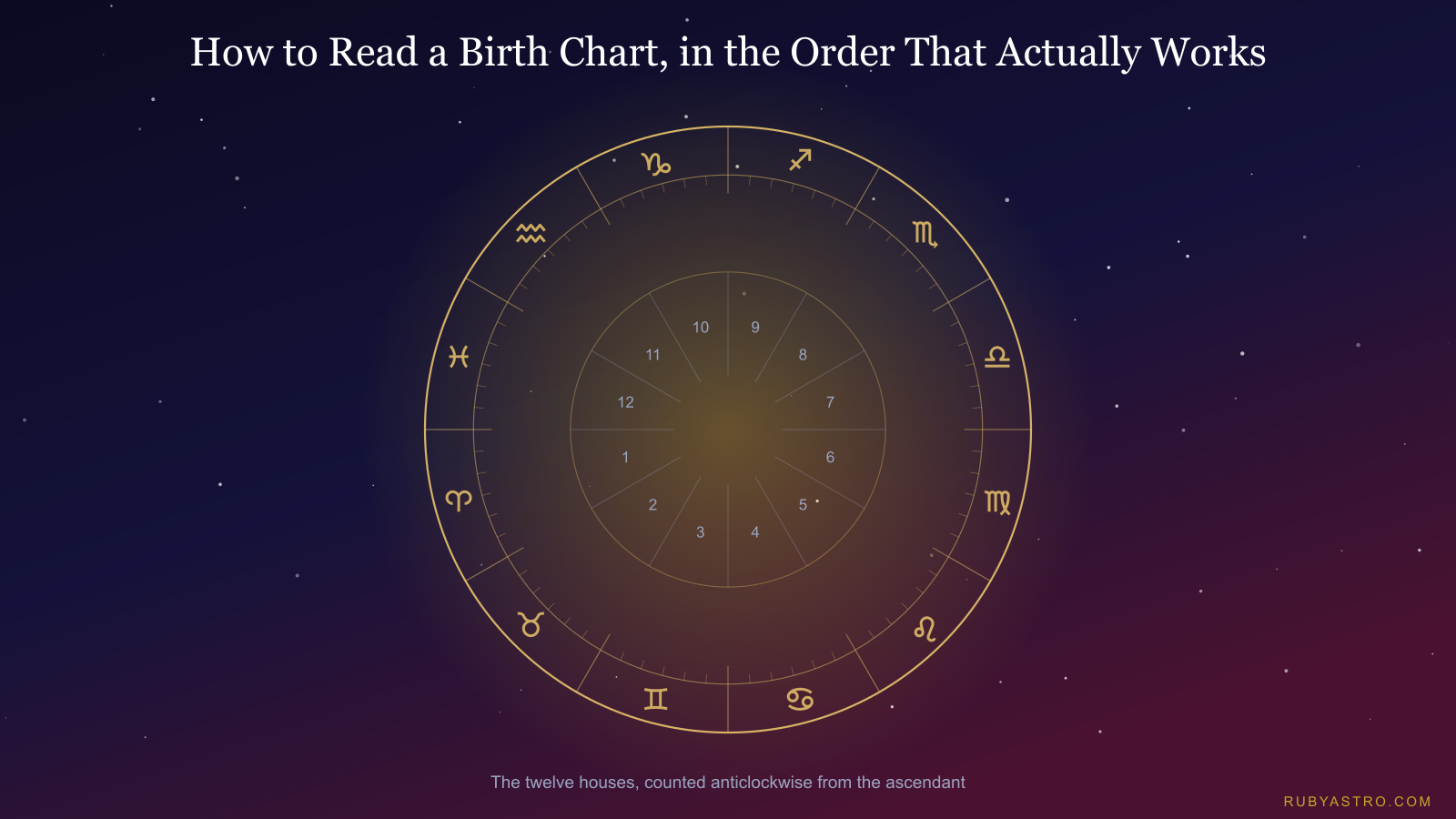
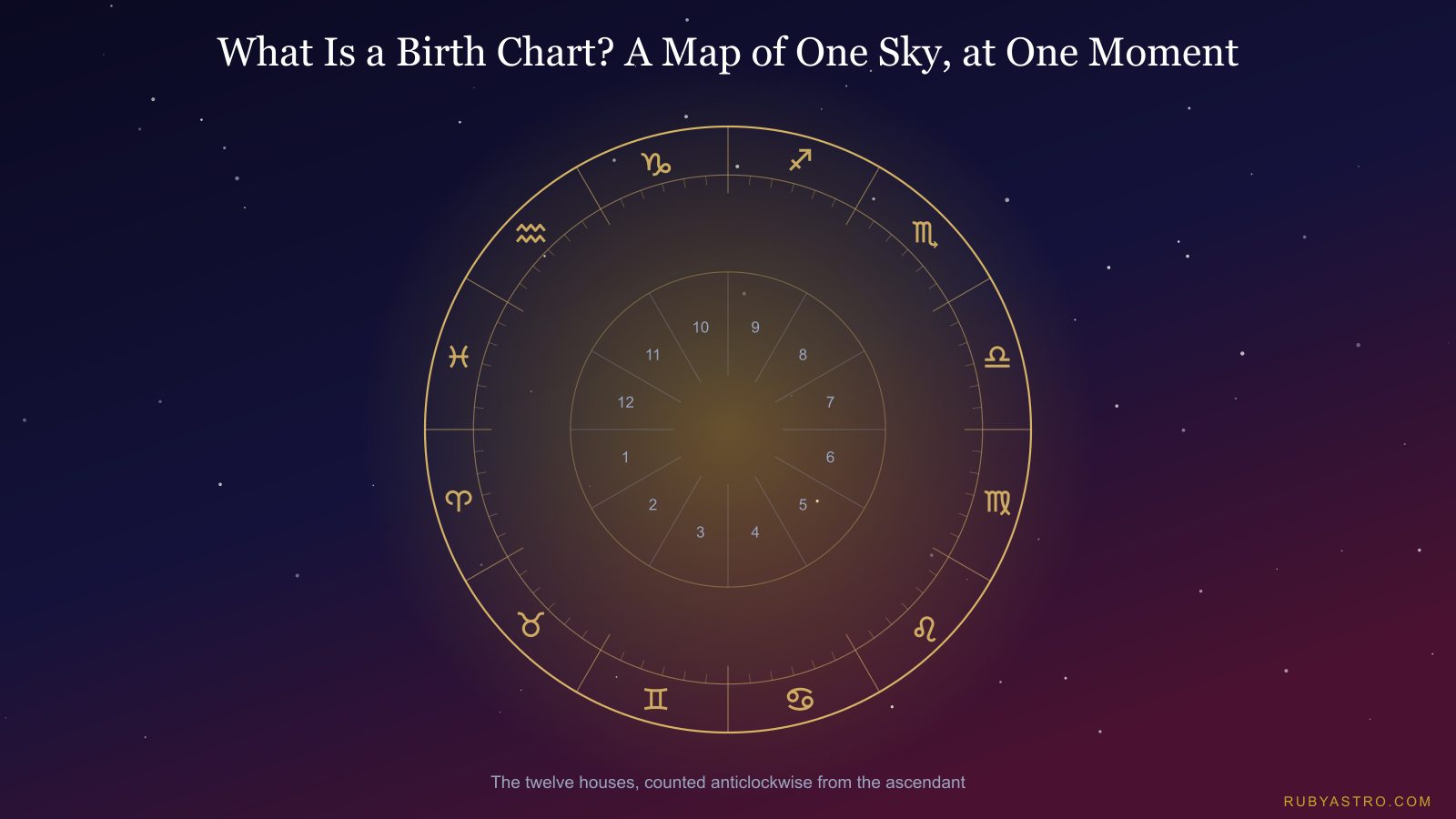
The oldest system, used throughout Hellenistic astrology and most of the medieval tradition, and revived in the last thirty years. Your rising sign becomes the entire 1st house, the next sign the entire 2nd, and so on. Every house is exactly thirty degrees.
The advantages are that it is simple, it works at any latitude, and all the old techniques were built on it. This site uses it for that reason: profections, for instance, makes no sense in a system where houses are unequal.
Placidus
The modern default, found in most software and most apps. It divides by the time it takes a degree to rise from the horizon to the midheaven, which produces houses of very unequal size. The midheaven is always the cusp of the 10th, which many astrologers consider the decisive advantage.
It breaks down at high latitudes. Above about 66 degrees north or south some houses become impossible to calculate, which is a real limitation for anybody born in northern Scandinavia or Alaska.
What to do about the disagreement
Run your chart in both. If a planet falls in the same house either way, it is settled. If it moves, you have learned which parts of your reading are system-dependent, which is worth knowing before you build anything on them.
The honest position is that this is unresolved. Anybody telling you their system is correct is expressing a preference, and the preference is usually whichever one they learned first.
The main house systems
System
How it divides
House sizes
Works at high latitude
Whole sign
One sign per house
All exactly 30 degrees
Yes
Equal
30 degrees from the ascendant
All exactly 30 degrees
Yes
Placidus
By time to rise
Very unequal
No, fails above about 66 degrees
Koch
By time, birthplace based
Very unequal
No
Campanus
By dividing the prime vertical
Unequal
Mostly
Porphyry
Thirds between the angles
Unequal but simple
Yes
How much a system change actually moves
For a chart at a middle latitude, whole sign and Placidus usually agree about more than half the planets and disagree about the rest, mostly by one house. A planet at 28 degrees of a sign is the one most likely to move, because it sits near the edge in any system.
At high latitudes the difference becomes dramatic: Placidus houses can stretch to sixty degrees or collapse to ten, so a chart from Reykjavik can look completely unlike its whole sign version. That is not a reason to reject either, but it is a reason to know which you are looking at.
What people get wrong about this
Assuming your app's default is the only option. Most default to Placidus without saying so.
Switching systems until a placement reads the way you want. That is choosing a conclusion and working backwards.
Using Placidus for a birth near the Arctic or Antarctic circles, where it cannot be calculated properly.
Believing the question is settled. It is not, and anybody who says otherwise is stating a preference.
Everything on this page is general by necessity. A reading built from your own date, time and place is the version that names your placements rather than describing the categories they fall into. If you do not know your birth time, this covers how to find it.
Questions people ask
Which house system is correct?
Unresolved. Whole sign is the oldest and Placidus is the modern default, and no experiment has distinguished them.
Why do two apps give me different houses?
Because they use different house systems. Run your chart in both and see which placements move.
Which house system does this site use?
Whole sign, because the older techniques it describes were built on it and do not work without it.
RubyAstro writes about astrology for reflection and self-understanding. Nothing here is medical, legal or financial advice, and none of it is a prediction of events. Read our full disclaimer.
 Finding Your Birth Time