An aspect pattern is three or more planets making a recognisable shape. The common ones are the grand trine, the T-square, the grand cross, the yod and the kite. A pattern is read as a unit rather...
The RubyAstro TeamPublished August 16, 2026Dates checked August 16, 20264 min read
Aspect Patterns
The short answerAn aspect pattern is three or more planets making a recognisable shape. The common ones are the grand trine, the T-square, the grand cross, the yod and the kite. A pattern is read as a unit rather than as separate aspects, and the hard ones usually do more for a person than the easy ones.
Why a pattern is more than its parts
Three planets in a grand trine are not three trines. They are a closed circuit, and whatever energy goes into it circulates rather than going anywhere. That is a different statement from any single trine, and it is why patterns are named and tracked.
The useful rule is that a shape with no exit tends to stay put, and a shape with tension tends to produce something. That is the opposite of what beginners expect.
The grand trine
Three planets each about 120 degrees apart, usually all in the same element. The reputation is talent, and the real-world report is talent that does not get used, because nothing in the configuration creates any pressure to use it.
A grand trine with a fourth planet opposite one corner becomes a kite, and the kite is the version that produces, because the opposition supplies the pressure the trine lacks.
The T-square and the grand cross
A T-square is two planets in opposition with a third square to both. It is the most common pattern and the most productive: the empty point opposite the apex planet is where the resolution tends to come from, and people with T-squares are usually described as driven.
A grand cross is two oppositions at right angles, four planets, no empty point. It is rarer and harder, and the usual report is a person pulled four ways who becomes extremely capable as a result of having to manage it.
The yod
Two planets sextile each other, both quincunx a third. It is called the finger of fate, which overstates it considerably. A quincunx joins two signs with nothing in common, so a yod is two awkward adjustments pointing at one planet, and the usual description is a part of life that never quite settles.
Worth checking the orbs on this one. Yods are frequently claimed on aspects wide enough that the pattern is not really there.
The main aspect patterns
Pattern
Made of
Reputation
What people actually report
Grand trine
Three planets 120 degrees apart
Talent, ease
Ability that needs an outside push to get used
Kite
Grand trine plus an opposition
The productive grand trine
The same talent, with somewhere to go
T-square
Opposition plus a square to both
Tension, drive
The most productive pattern there is
Grand cross
Two oppositions at right angles
Difficulty
Capability built from having no easy option
Yod
Two sextiles, two quincunxes
Fate
An area that never quite resolves
Mystic rectangle
Two oppositions, trines and sextiles
Balance
Tension with a built-in release
A T-square, read properly
Sun in Aries opposite Moon in Libra, both square Saturn in Capricorn. The opposition is a person pulled between their own direction and somebody else's; Saturn at the apex means the pressure shows up as duty, structure or an authority figure.
The empty point is Cancer, opposite Saturn. The traditional reading is that what resolves the pattern is whatever that empty house and sign ask for: in this case, letting something be soft, which is exactly what the rest of the configuration makes difficult. That is why T-squares are productive. They describe a problem with an indicated exit.
What people get wrong about this
Claiming a pattern on wide orbs. A grand trine with a nine degree orb at one corner is three planets that happen to be in the same element.
Reading the easy patterns as good news. A closed circuit of trines is the one most often reported as unused.
Missing the empty point opposite a T-square apex, which is where the tradition says the resolution lives.
Calling every quincunx pair a yod. The sextile between the other two has to be there and has to be tight.
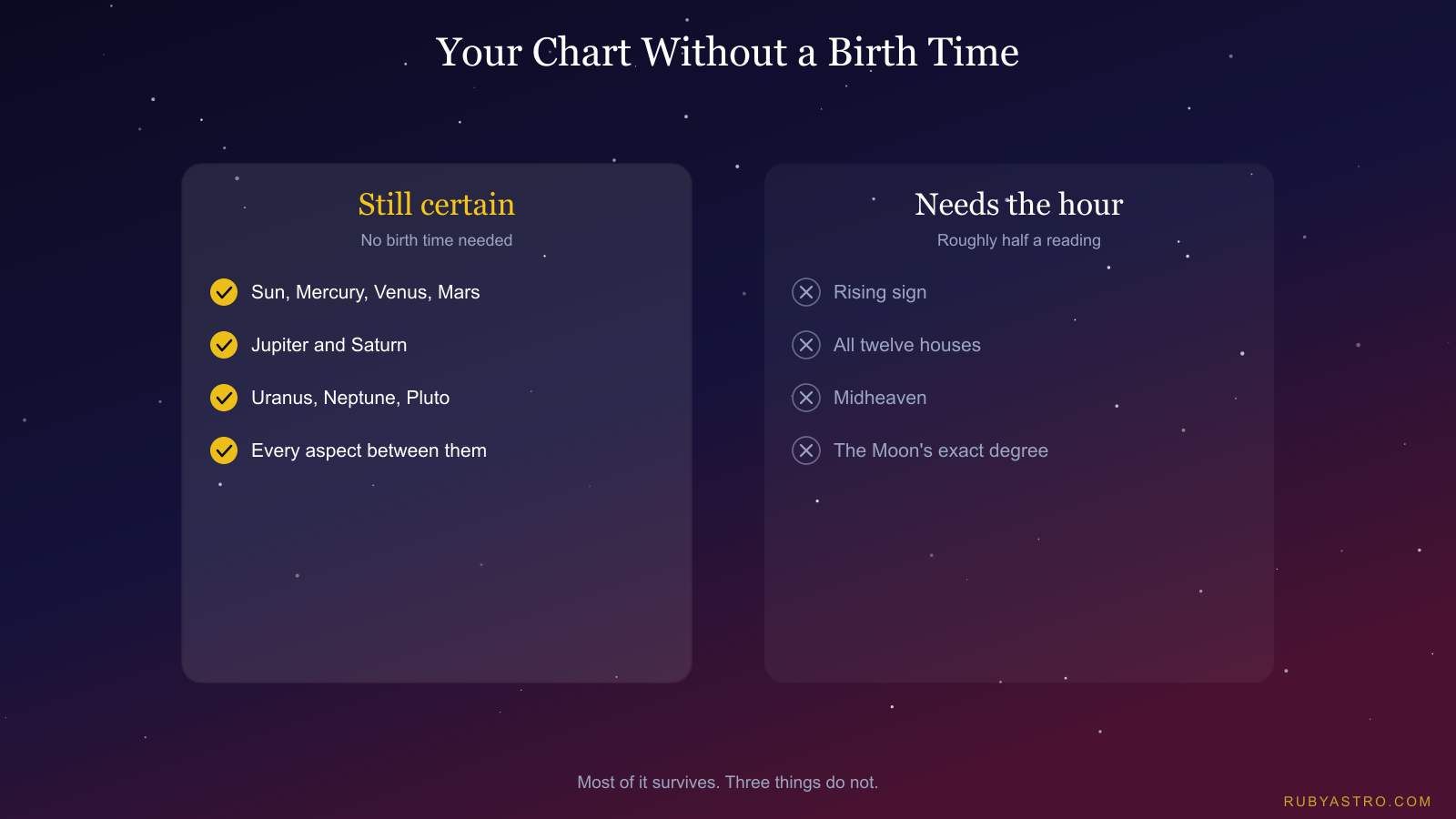
Everything on this page is general by necessity. A reading built from your own date, time and place is the version that names your placements rather than describing the categories they fall into. If you do not know your birth time, this covers how to find it.
Questions people ask
What is an aspect pattern?
Three or more planets forming a recognisable geometric shape, read as a single unit.
Is a grand trine lucky?
It has that reputation. In practice a closed circuit of ease often means the talent sits unused, and a kite or a hard aspect elsewhere is what gets it moving.
What is the most common aspect pattern?
The T-square, and it is also the one most consistently associated with getting things done.
RubyAstro writes about astrology for reflection and self-understanding. Nothing here is medical, legal or financial advice, and none of it is a prediction of events. Read our full disclaimer.
 Finding Your Birth Time