 Planets in Houses
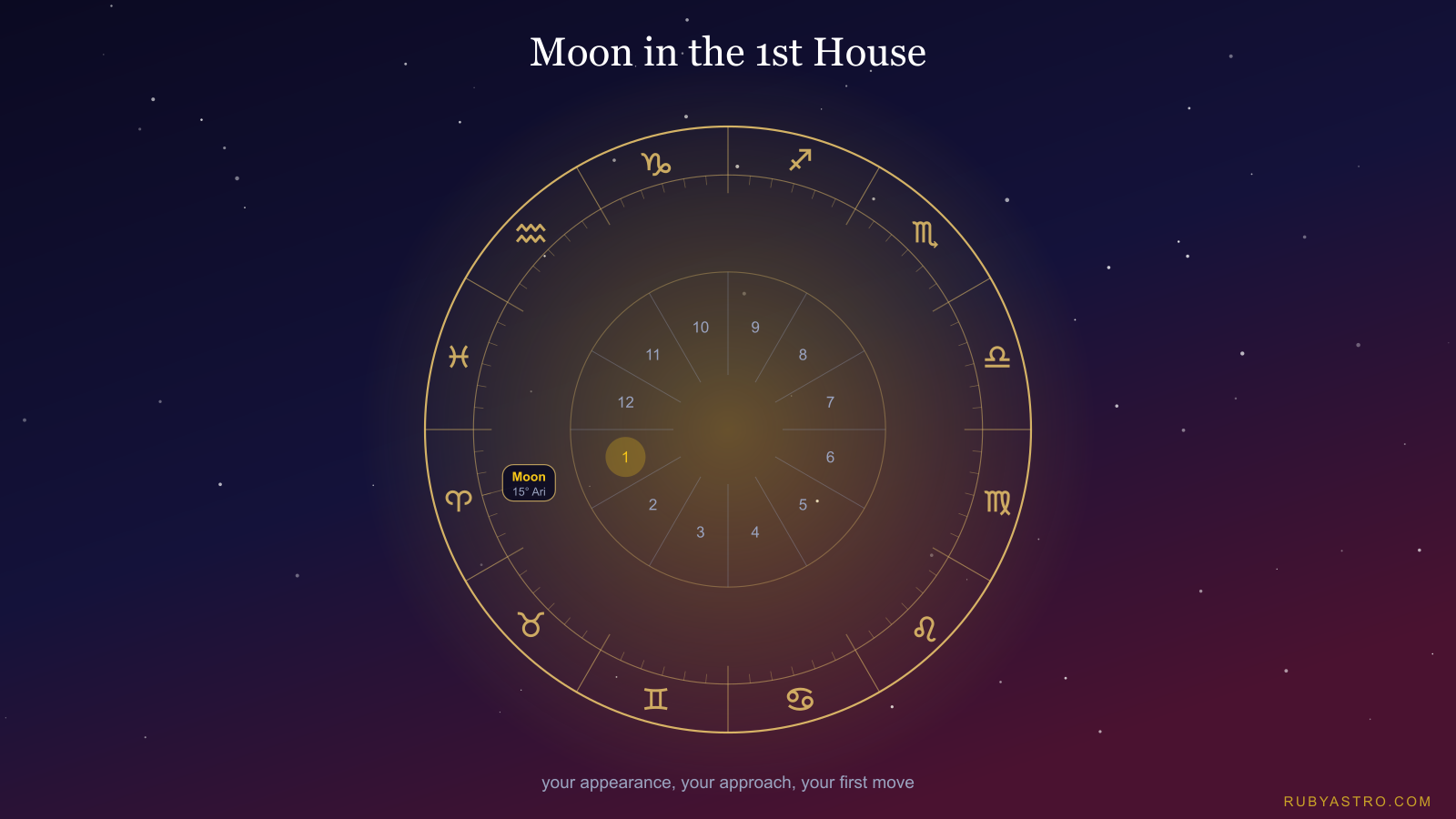
Moon in the First House: What It Means
Moon in the first house puts feelings, needs and home into the department of self and first impressions. Here is what it does, where it strains, and which sign that means for your rising sign.
Aspects
Moon trine Saturn puts the two 120 degrees apart. Moon governs feelings, needs and home, Saturn governs limits, work and maturity, and the pairing is about needing something and not expecting to get it, which is the single most quietly consequential aspect in a chart. Here is what the angle does to it.
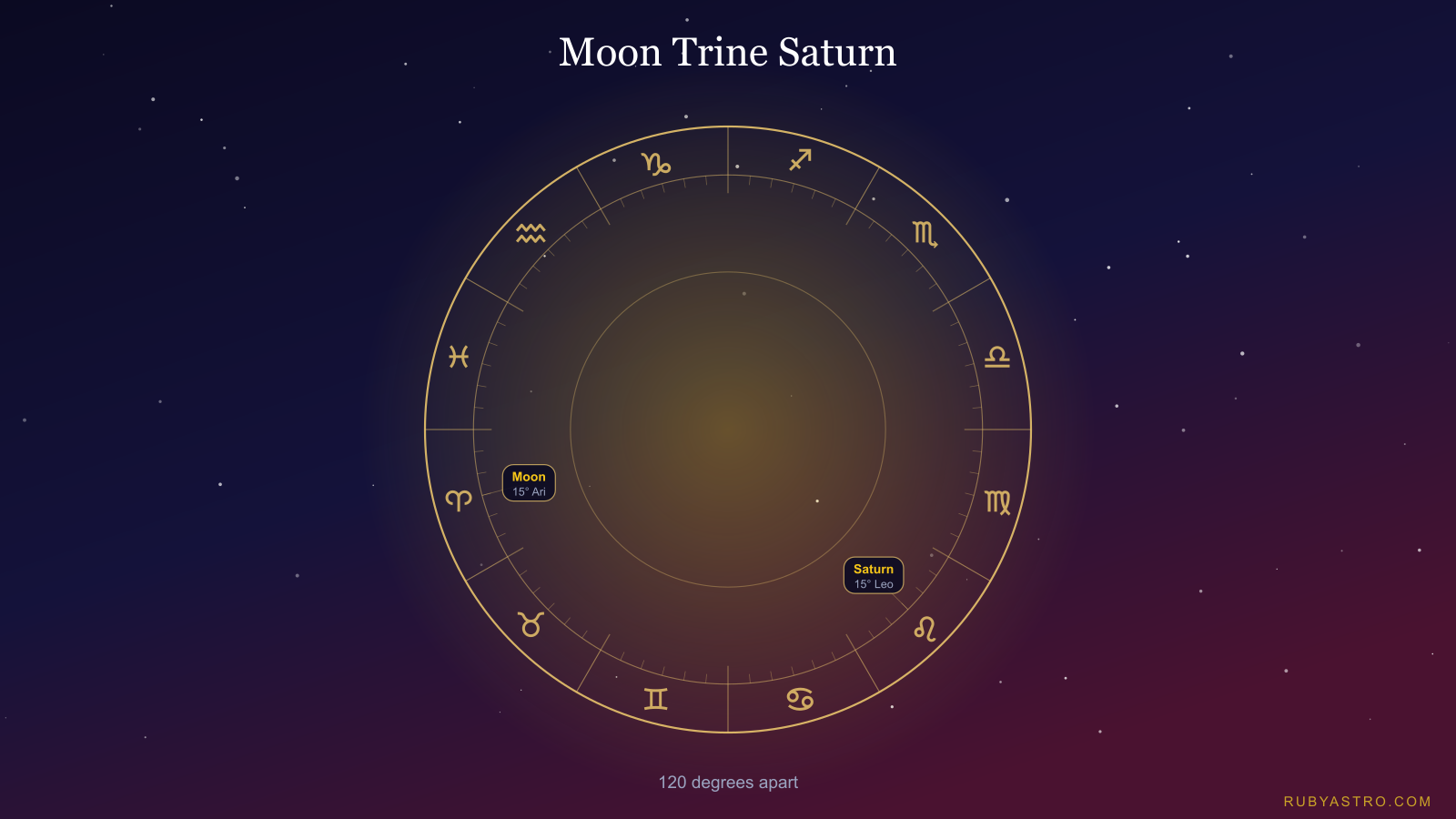
An aspect is simply the angle between two planets, and the angle is the relationship. Astrologers read 120 degrees the same way whether it turns up between these two planets or any others, which is why the logic here is checkable rather than asserted.
Moon is the need to feel safe. Saturn is the need to do it properly. Those are different jobs, and in a chart they are done by different parts of a person at the same time.
The subject of this particular pairing is needing something and not expecting to get it, which is the single most quietly consequential aspect in a chart. That is true of any aspect between these two; what changes with the angle is whether the two drives cooperate, ignore each other or collide.
A trine is a genuine talent and it costs nothing to use. The two planets share an element and understand each other immediately, so this part of the chart simply works.
The cost: Because it is easy it is rarely developed. A trine will carry somebody a long way on natural ability and then stop, usually at the point where the people around them have had to learn something.
Aspects are not on or off. They have an orb, which is how far from exact the angle can be and still count. For trines the usual working orb is up to about 7 degrees, and the closer to exact, the louder the aspect.
| Distance from exact | How much it shows | In practice |
|---|---|---|
| Under 1 degree | Dominant | One of the defining features of the chart. Other people notice it before you explain anything. |
| 1 to 3 degrees | Strong | Clearly present and recognisable in the description above. |
| 3 to 6 degrees | Present | Real but not loud. Usually recognisable once pointed out. |
| Beyond 7 degrees | Not counted | Outside the working orb. Astrologers would not read it. |
The easy aspects have a reputation they do not deserve either. Trines give you something for nothing, and things given for nothing are usually not developed. Somebody with this aspect and no hard aspects in the same area frequently achieves less with the ability than somebody who had to work at it.
The honest summary is that an aspect tells you where the energy goes, not whether your life will be easy. Both kinds are needed, and most charts have plenty of each.
Possibly. The Moon moves twelve to fifteen degrees a day, which is enough to form or break an aspect over twenty-four hours. If this one is close to exact in a chart cast for noon, it is worth confirming your birth time before relying on it. Here is how to find yours.
The same pair at a different angle is the quickest comparison worth making: Moon sextile Saturn and Moon square Saturn describe the same two drives getting along and grinding, which is the clearest way to see what the planets themselves are doing underneath the angle.
How close an aspect has to be to count matters more here than most people expect: one degree from exact does several times the work of six. And an aspect is often one side of a larger shape, which the aspect patterns page covers.
The two planets are 120 degrees apart in the chart. Moon governs feelings, needs and home and Saturn governs limits, work and maturity, so the aspect is about needing something and not expecting to get it, which is the single most quietly consequential aspect in a chart, with talent so natural you forget it is a talent.
It is an easy aspect, so this part of the chart works without effort. The catch is the opposite of what people expect: because it is easy it is rarely developed. A trine will carry somebody a long way on natural ability and then stop, usually at the point where the people around them have had to learn something.
The usual working orb for a trine is up to about 7 degrees. Under a degree it is one of the defining features of the chart; beyond the orb astrologers would not read it at all.
It helps. The Moon moves up to fifteen degrees a day, so an aspect involving it can form or break within a single day.
RubyAstro writes about astrology for reflection and self-understanding. Nothing here is medical, legal or financial advice, and none of it is a prediction of events. Read our full disclaimer.
Planets in HousesMoon in the first house puts feelings, needs and home into the department of self and first impressions. Here is what it does, where it strains, and which sign that means for your rising sign.
 Planets in Houses
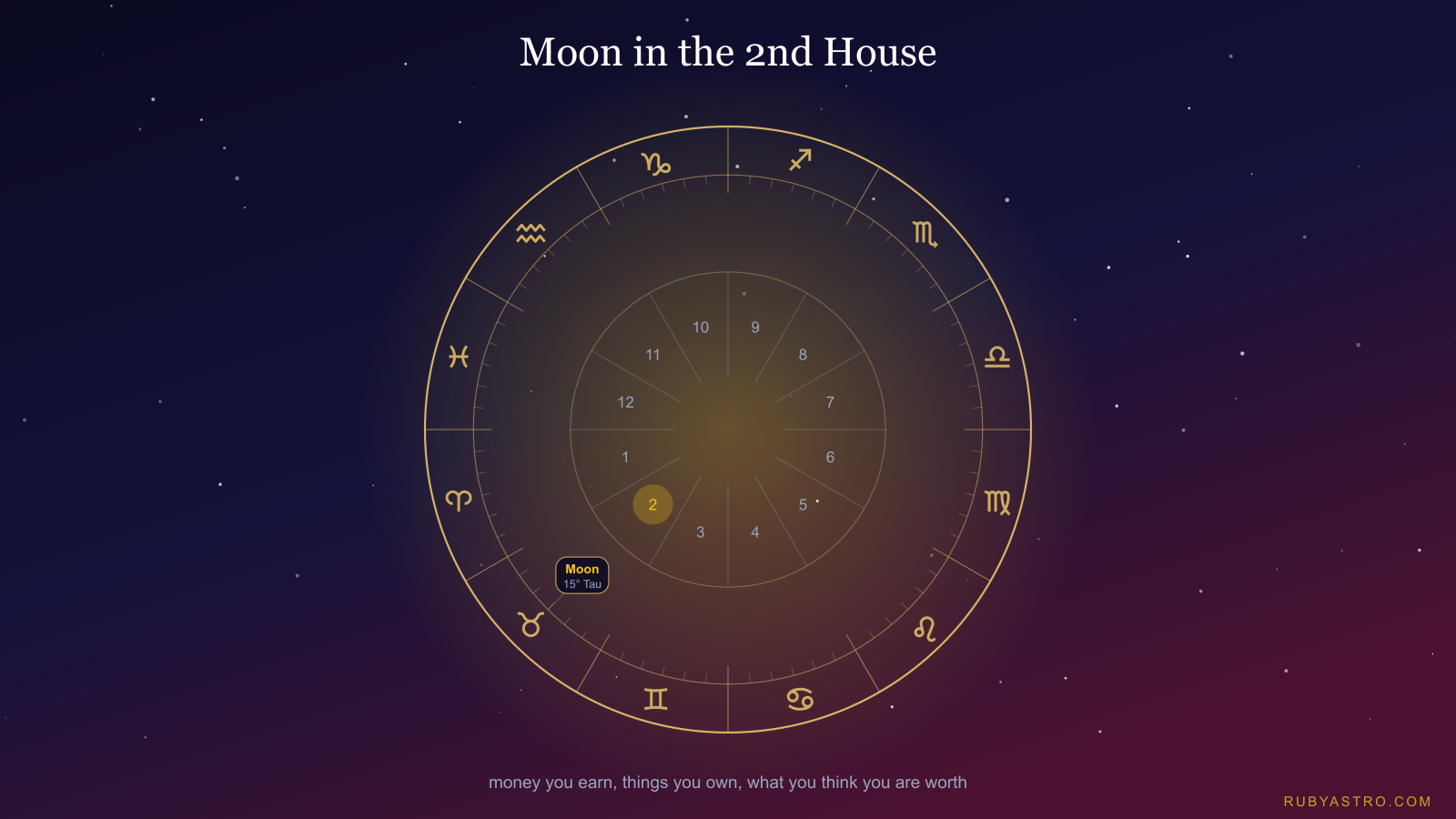
Moon in the second house puts feelings, needs and home into the department of money and values. Here is what it does, where it strains, and which sign that means for your rising sign.
 Planets in Houses
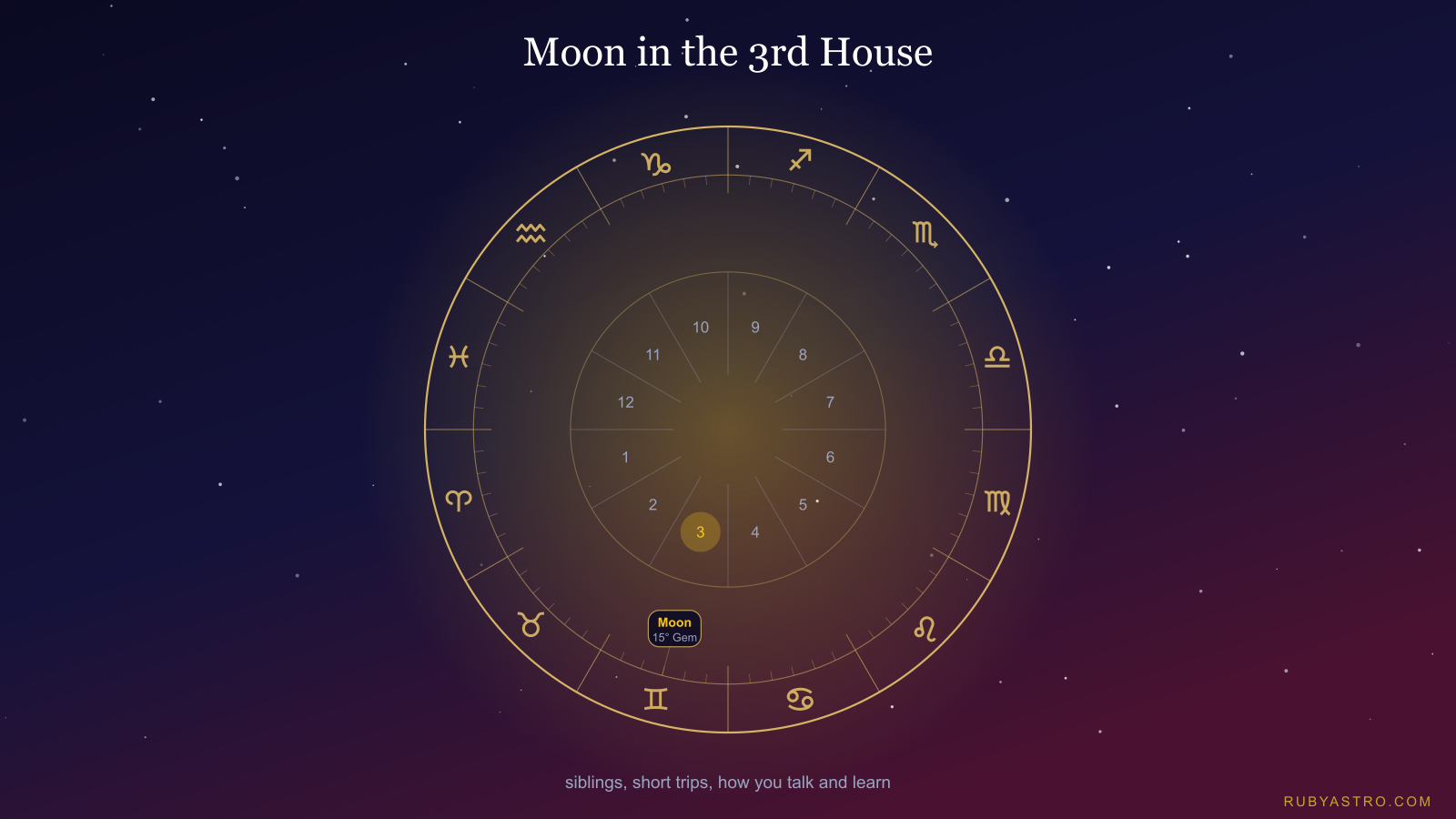
Moon in the third house puts feelings, needs and home into the department of communication and siblings. It is also the house Moon traditionally rejoices in. Here is what it does, where it strains, and which sign that means for your rising sign.
 Aspects
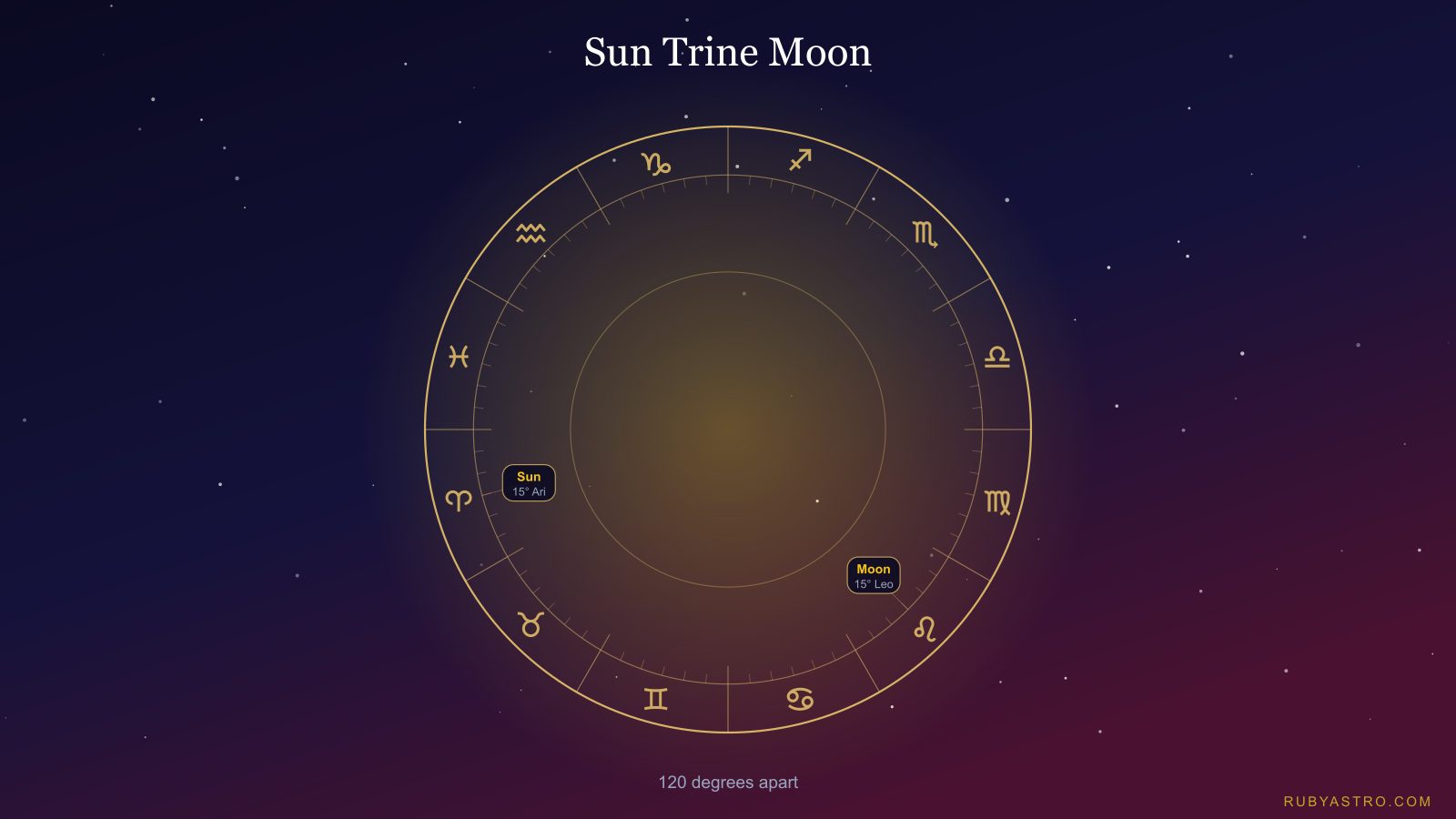
Sun trine Moon puts the two 120 degrees apart. Sun governs identity and purpose, Moon governs feelings, needs and home, and the pairing is about who you are against what you need, which is the oldest tension in a chart and the one that decides how at ease somebody is with themselves. Here is what the angle does to it.
 Aspects
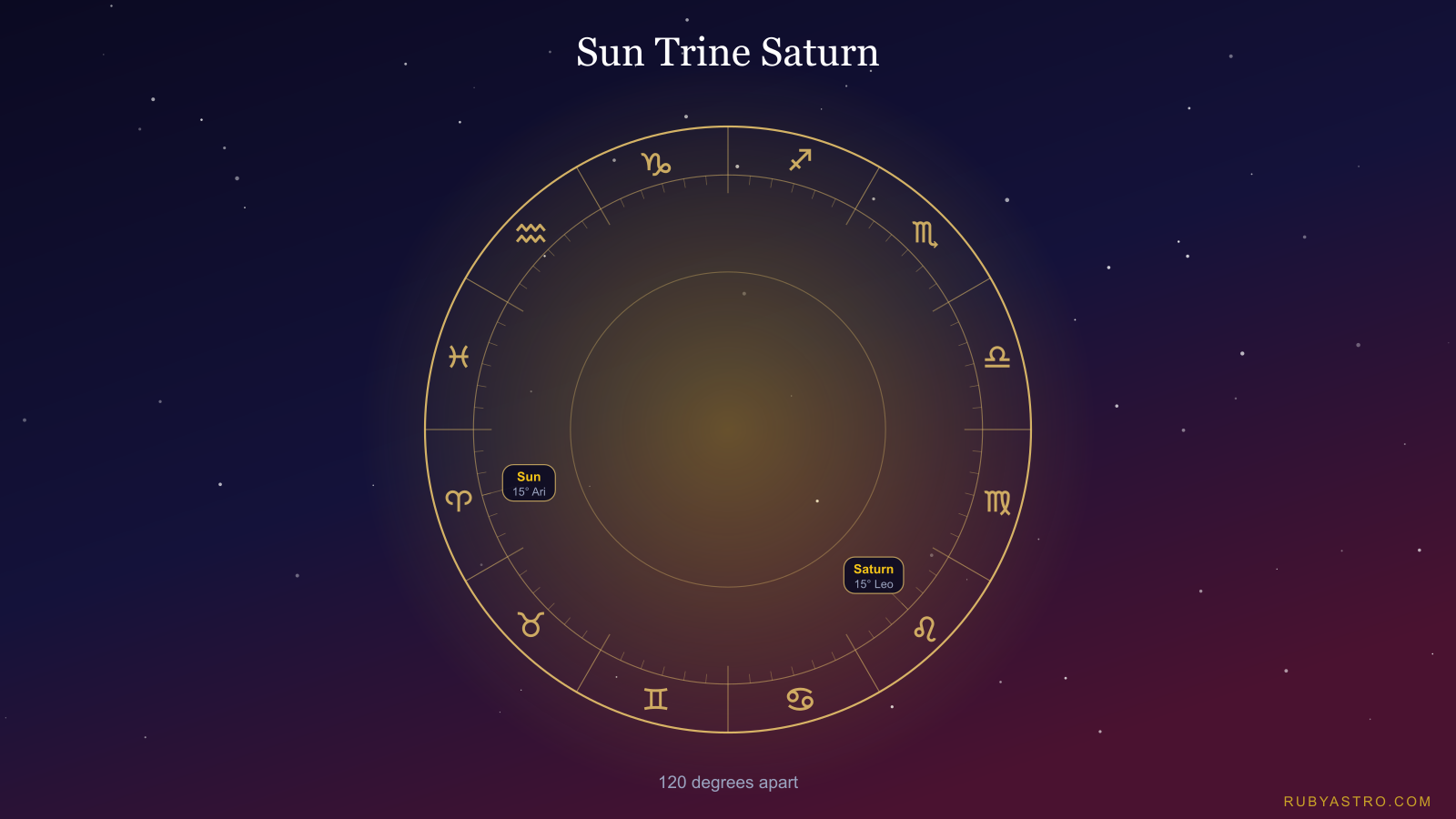
Sun trine Saturn puts the two 120 degrees apart. Sun governs identity and purpose, Saturn governs limits, work and maturity, and the pairing is about identity against limitation, the pairing most likely to produce either a very competent adult or a very long wait to feel like one. Here is what the angle does to it.
 Aspects
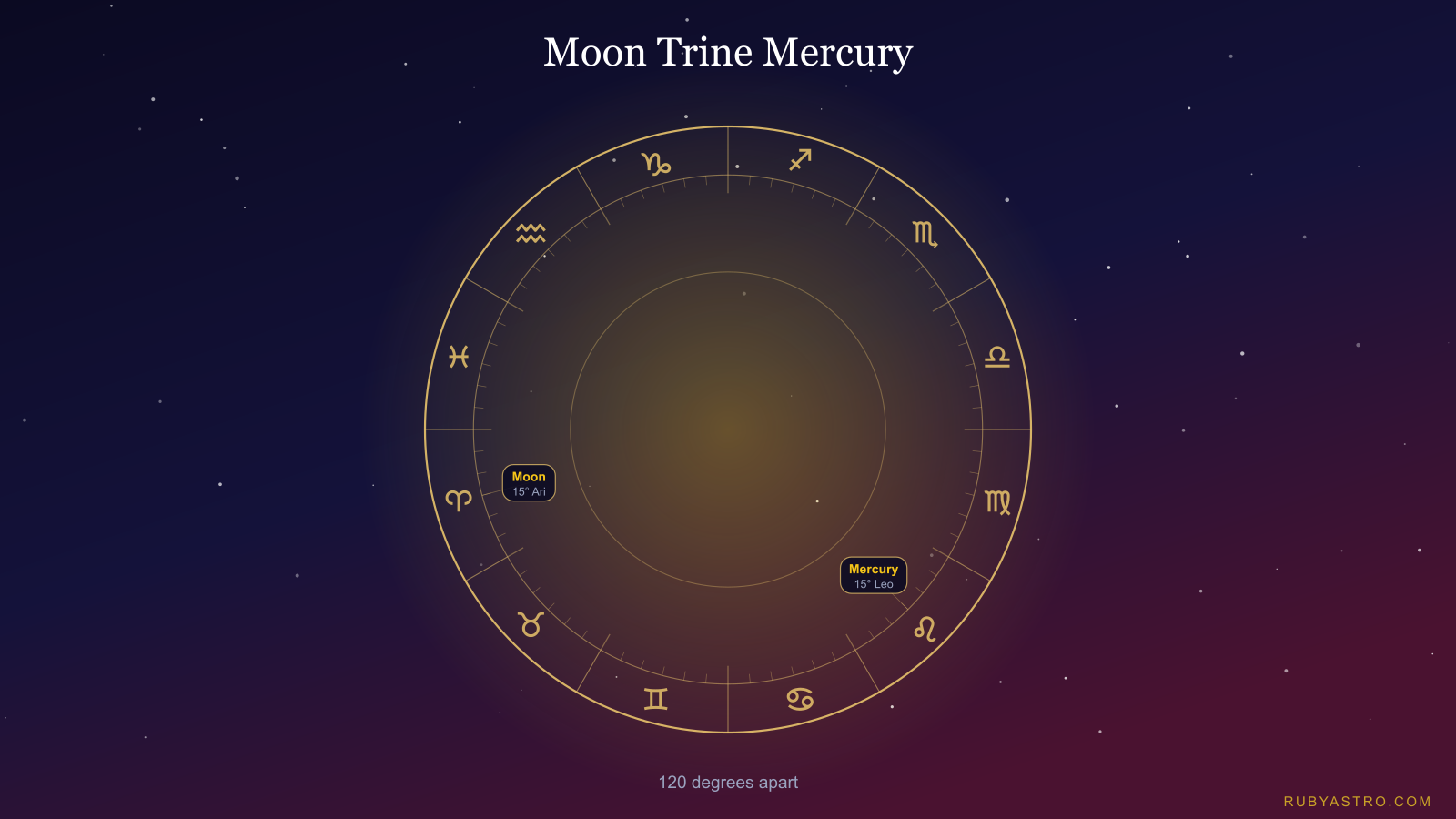
Moon trine Mercury puts the two 120 degrees apart. Moon governs feelings, needs and home, Mercury governs thinking, speaking and learning, and the pairing is about feeling and articulation, which is to say whether you can say what is actually going on. Here is what the angle does to it.