 Astrology Calendar
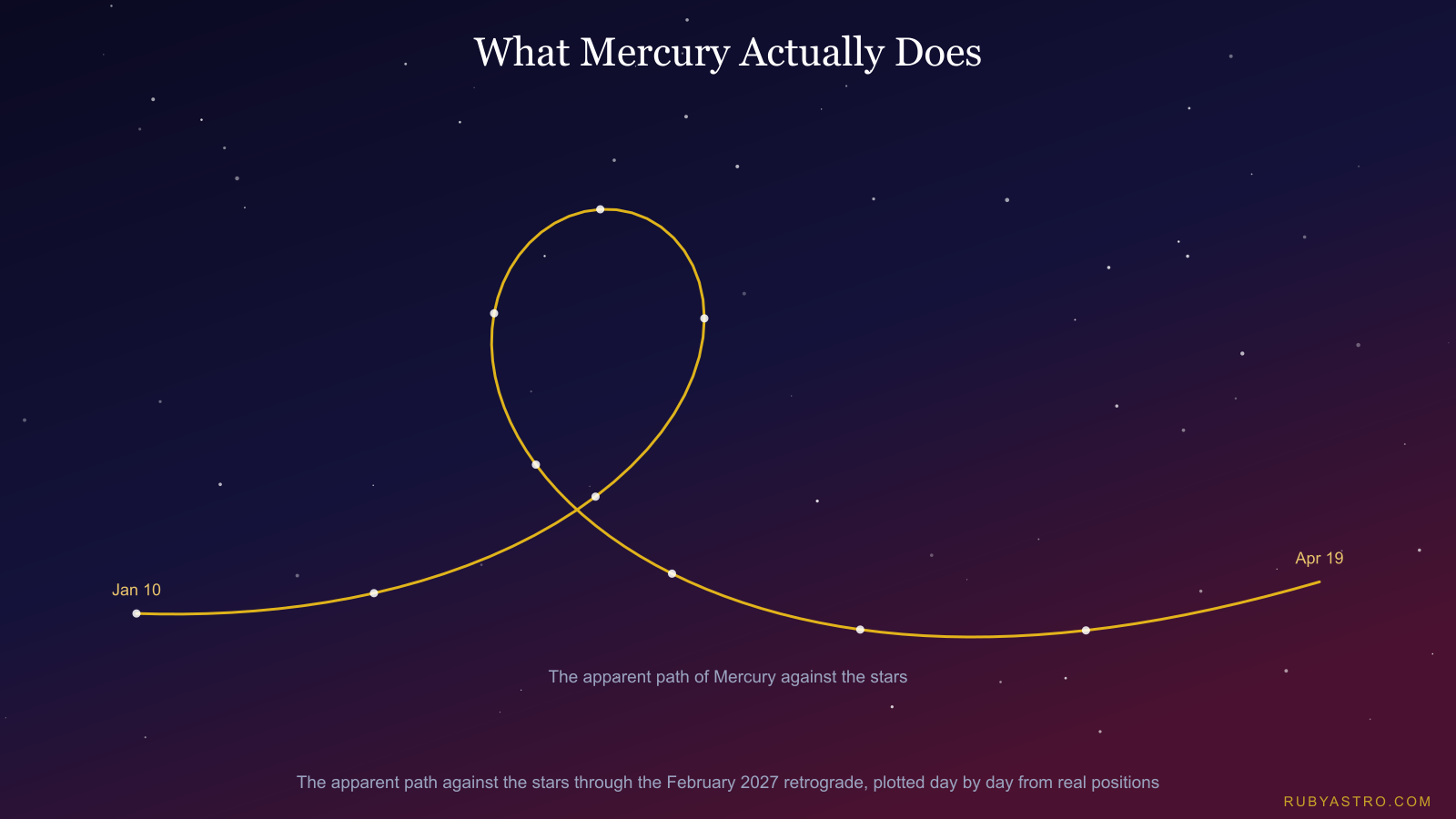
Mercury Retrograde 2027: The Exact Dates
Three windows in 2027, with stations to the minute and the degrees each one covers. Computed from an ephemeris, not copied, and dated so you can tell.
Retrogrades
Neptune goes retrograde once a year, for about five months, read as a review of imagination, illusion and what you would rather not look at directly. The computed dates, what retrograde motion physically is, and an honest account of the evidence.
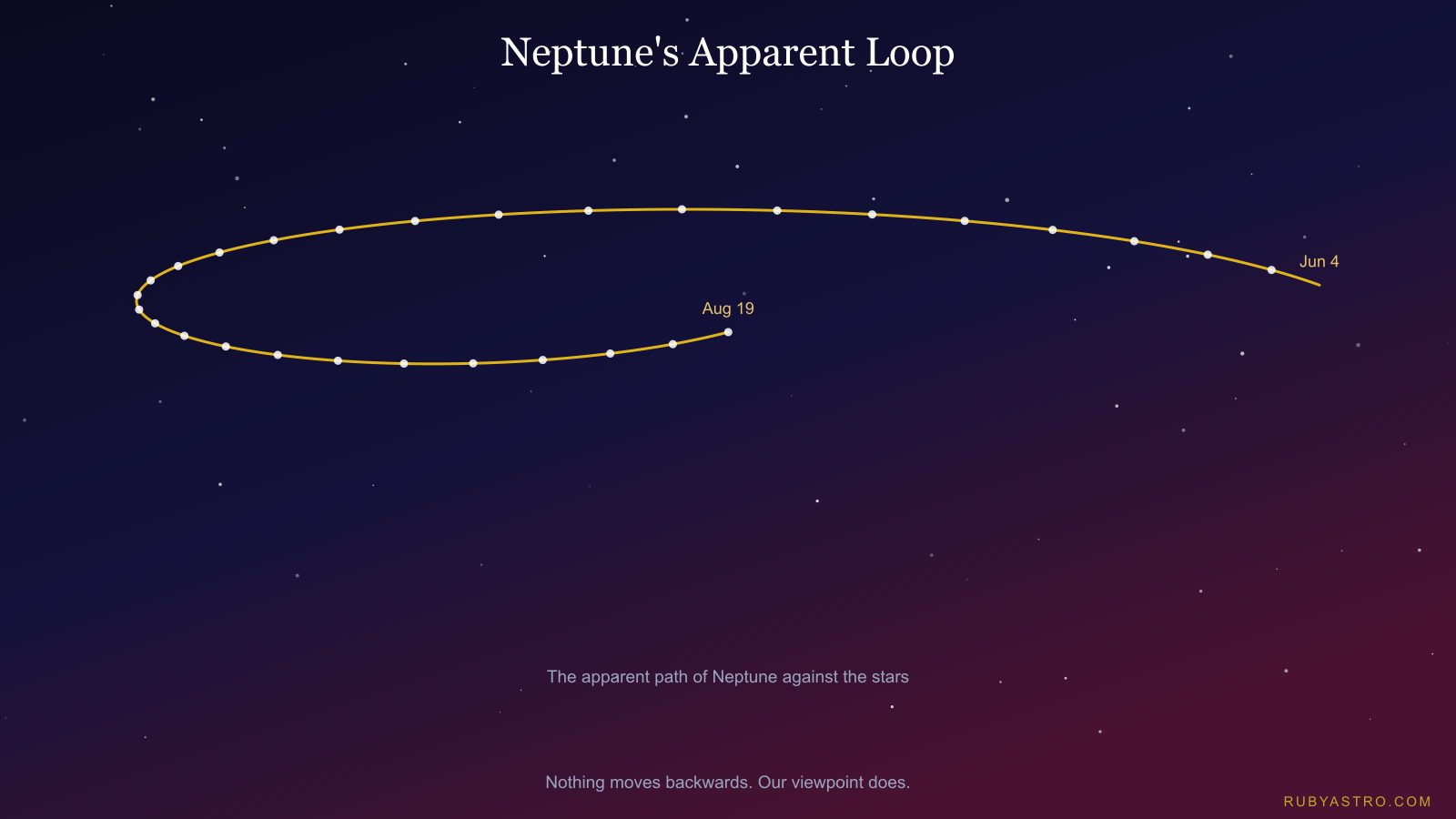
Computed from the ephemeris: these are the moments Neptune's apparent motion changes direction, which is the actual definition of a station rather than an approximation of one.
| Retrograde from | Direct on | Length | Degrees covered |
|---|---|---|---|
| July 7, 2026 | December 12, 2026 | 158 days | 4°25' Aries back to 1°37' Aries |
| July 9, 2027 | December 15, 2027 | 158 days | 6°40' Aries back to 3°51' Aries |
| July 11, 2028 | December 16, 2028 | 158 days | 8°54' Aries back to 6°06' Aries |
| July 13, 2029 | December 19, 2029 | 158 days | 11°09' Aries back to 8°20' Aries |
| July 16, 2030 | December 21, 2030 | 158 days | 13°23' Aries back to 10°35' Aries |
| July 19, 2031 | December 24, 2031 | 158 days | 15°38' Aries back to 12°49' Aries |
| July 20, 2032 | December 25, 2032 | 158 days | 17°52' Aries back to 15°04' Aries |
| July 23, 2033 | December 28, 2033 | 158 days | 20°07' Aries back to 17°19' Aries |
| July 25, 2034 | December 30, 2034 | 158 days | 22°22' Aries back to 19°34' Aries |
| July 28, 2035 | January 2, 2036 | 158 days | 24°37' Aries back to 21°49' Aries |
To the hour: Neptune turned retrograde July 7, 2026, 7:20 AM ET and goes direct December 12, 2026, 5:13 PM ET.
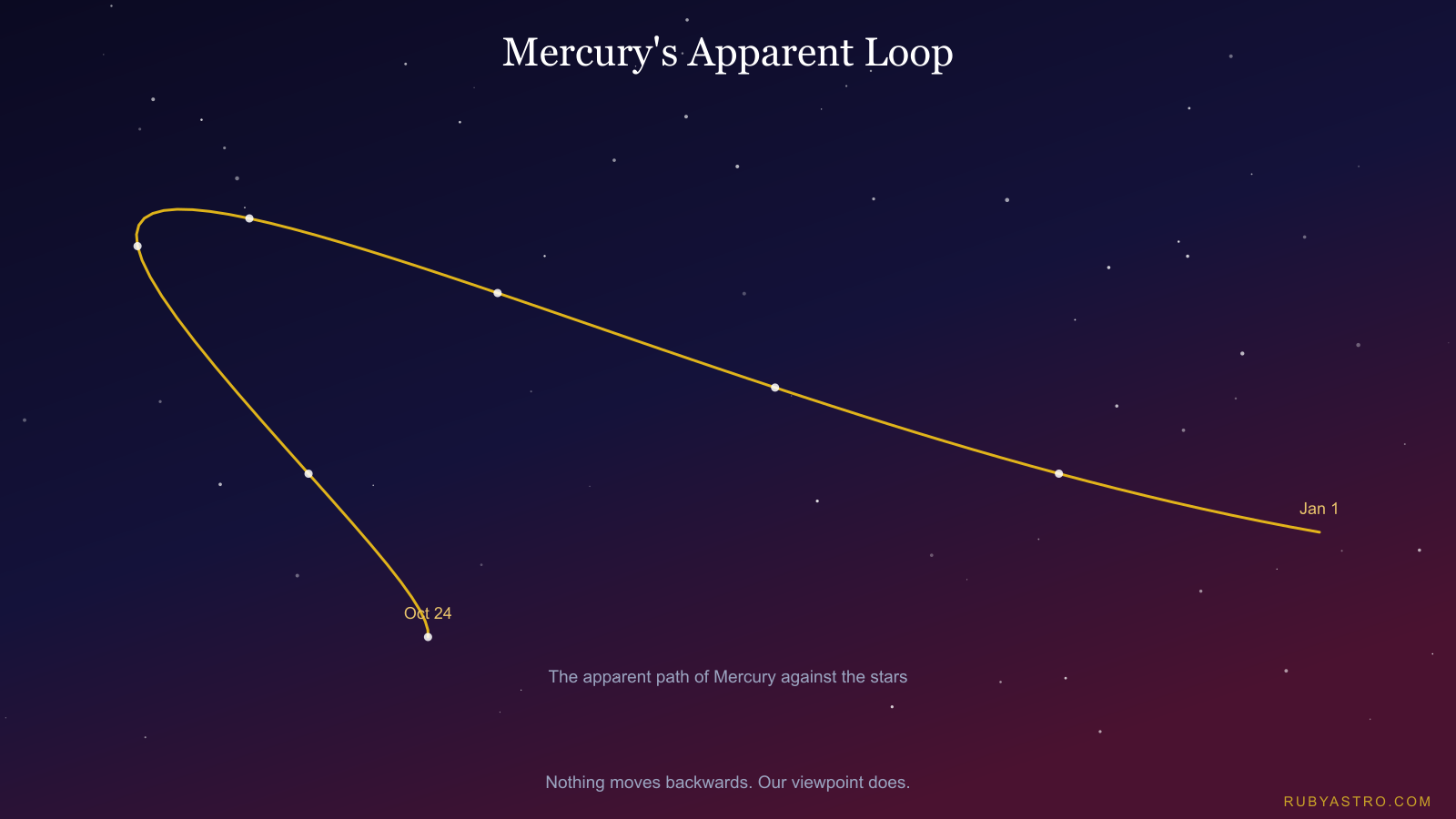
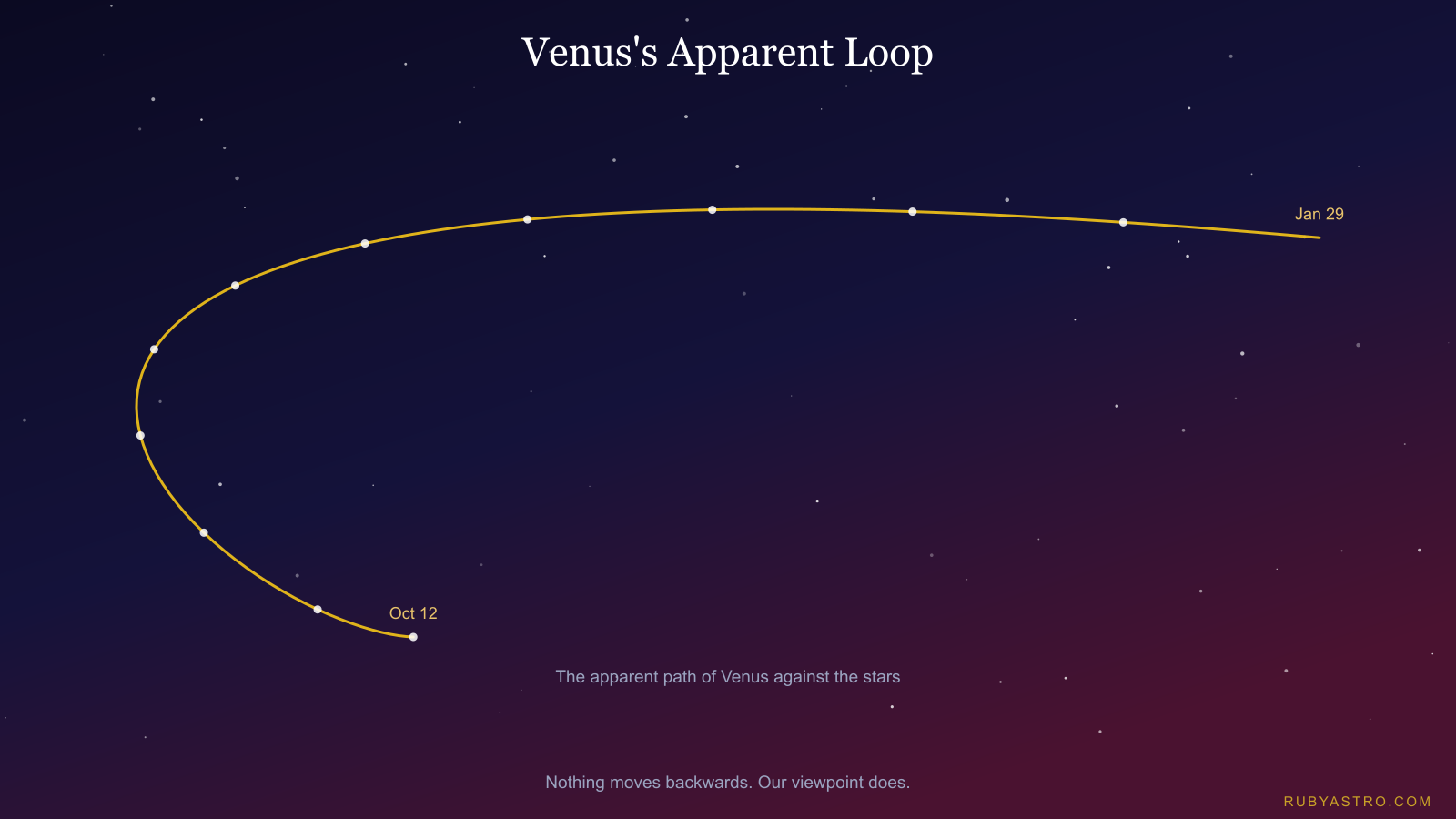
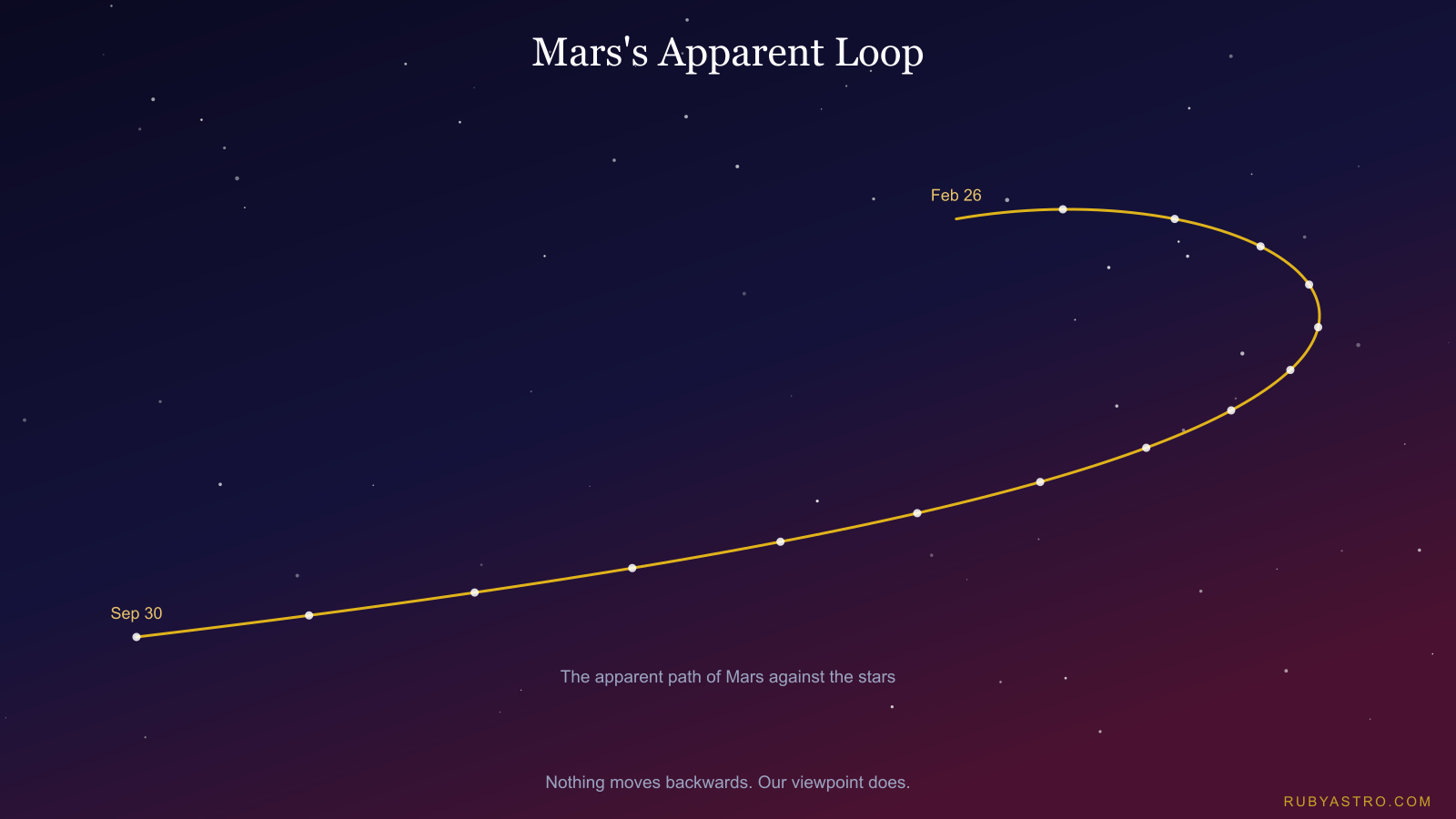
No planet goes backwards. Retrograde is an appearance, and it is the appearance that gave astronomy one of its hardest problems for two thousand years. A planet looks like it reverses because we are watching it from another moving planet: when the Earth overtakes an outer planet on the inside of its orbit, or an inner planet overtakes us, the line of sight swings the other way for a while.
The same thing happens on a motorway. Overtake a slower car and, against the distant hills, it appears to slide backwards for a few seconds. Nothing about the other car changed. Your position did.
Explaining those loops is what Ptolemy's epicycles were for, and getting rid of them is a large part of why heliocentric astronomy won. So retrograde motion is completely real, completely understood, and entirely a matter of where you are standing.
Neptune retrograde is traditionally read as a review of imagination, illusion and what you would rather not look at directly. The reasoning is straightforward once you know what the motion is: the planet covers the same stretch of zodiac three times, forward, back, and forward again, so anything it touches gets touched three times. Revisiting is a description of the geometry before it is an interpretation.
Neptune is retrograde about 43 per cent of the time. That figure is worth knowing, because the amount of attention a retrograde gets is almost exactly inverse to how rare it is. Mercury retrograde is famous and common. Venus retrograde is uncommon and barely discussed.
| Planet | Retrograde | How often |
|---|---|---|
| Mercury | about 19% | 3 or 4 times a year, 3 weeks each |
| Venus | about 7% | every 18 months, about 6 weeks |
| Mars | about 9% | every 2 years, 2 to 3 months |
| Jupiter | about 30% | yearly, about 4 months |
| Saturn | about 36% | yearly, about 4 and a half months |
| Uranus | about 41% | yearly, about 5 months |
| Neptune | about 43% | yearly, about 5 months |
| Pluto | about 44% | yearly, about 5 and a half months |
The outer planets are retrograde for so much of the year that treating one as an event makes little sense. What astrologers watch there is the station: the few days the planet appears to stand still before turning, which is when it is moving slowest against the sky and sitting longest on one degree.
Neptune is retrograde about 43 per cent of the time, so a meaningful share of people have Neptune retrograde in their birth chart. The usual reading is that the planet's job gets done inwardly or on a second pass rather than straightforwardly, which is a description rather than a problem. It is not a flaw, it is not rare enough to be special, and a chart with it is not worse than one without.
Whether yours is retrograde needs the chart calculated, although for this one a birth time is less critical than usual: retrograde status does not change through a day.
July 7, 2026 to December 12, 2026, which means it is retrograde now. The table on this page lists the next ten periods.
Once a year, for about five months.
It is read as a review of imagination, illusion and what you would rather not look at directly.
No. It is an optical effect of watching one moving planet from another moving planet. The same thing makes a slower car appear to slide backwards as you overtake it.
RubyAstro writes about astrology for reflection and self-understanding. Nothing here is medical, legal or financial advice, and none of it is a prediction of events. Read our full disclaimer.
Astrology CalendarThree windows in 2027, with stations to the minute and the degrees each one covers. Computed from an ephemeris, not copied, and dated so you can tell.
 Transits & Forecasts
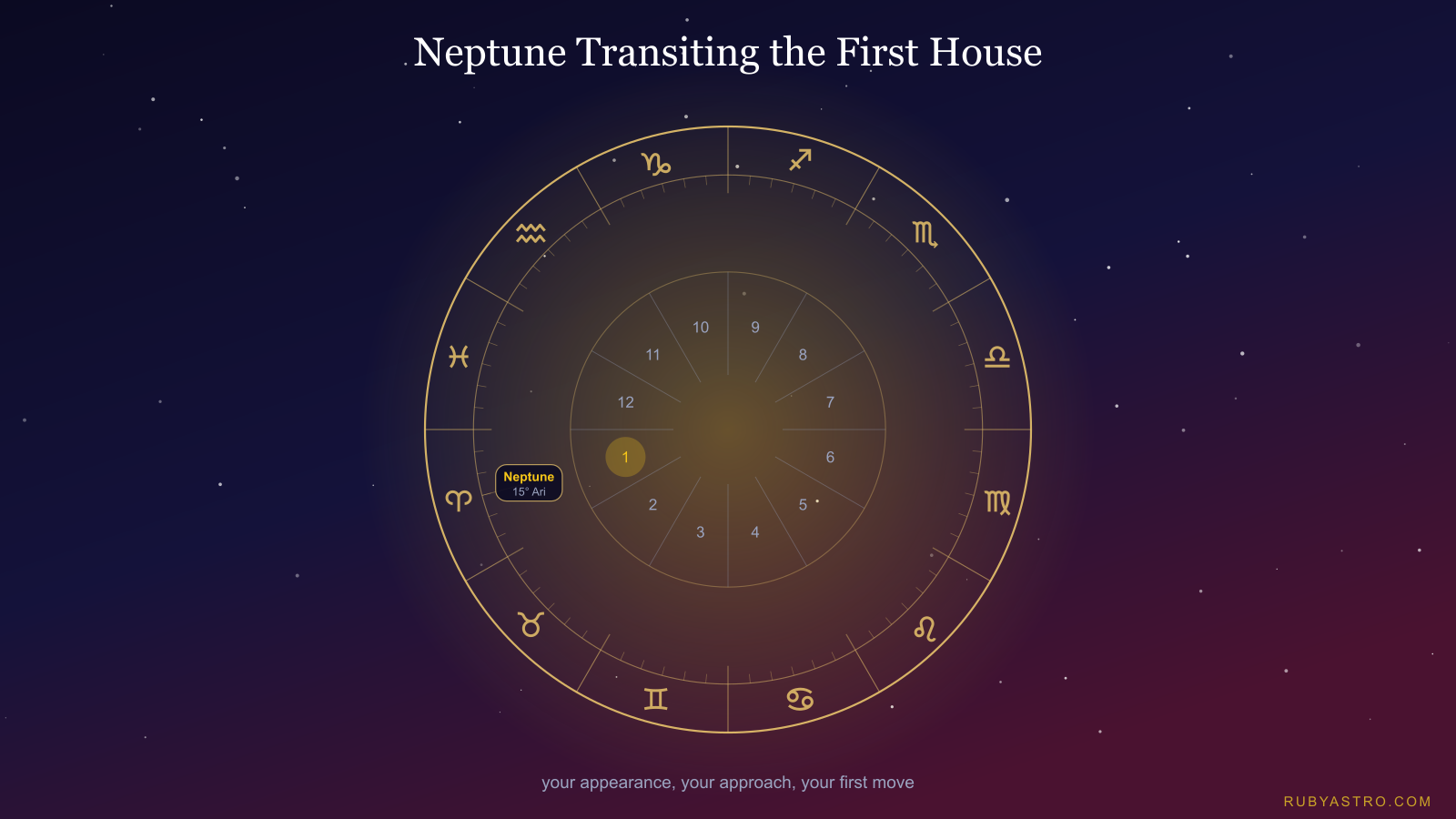
Neptune through your 1st house puts about fourteen years of pressure on identity. The real dates for all twelve rising signs, computed from the ephemeris, including the retrograde wobble at the start.
 Transits & Forecasts
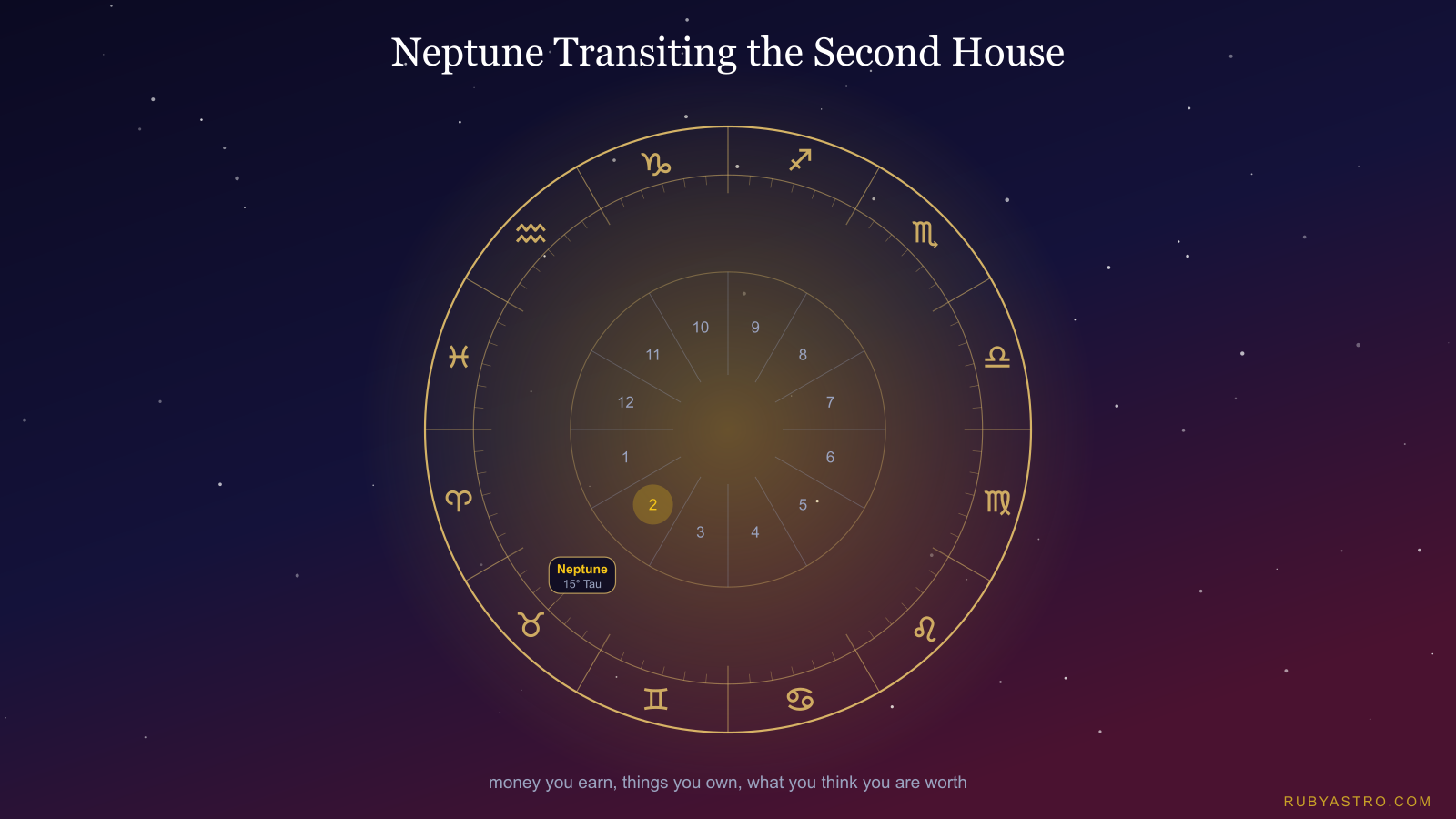
Neptune through your 2nd house puts about fourteen years of pressure on money and self-worth. The real dates for all twelve rising signs, computed from the ephemeris, including the retrograde wobble at the start.
 Retrogrades
Mercury goes retrograde three or four times a year, for about three weeks, read as a review of communication, travel, paperwork and anything with a send button. The computed dates, what retrograde motion physically is, and an honest account of the evidence.
 Retrogrades
Venus goes retrograde about every eighteen months, for roughly six weeks, read as a review of relationships, money, taste and what you value. The computed dates, what retrograde motion physically is, and an honest account of the evidence.
 Retrogrades
Mars goes retrograde about every two years, for two to three months, read as a review of drive, anger, momentum and anything you are pushing. The computed dates, what retrograde motion physically is, and an honest account of the evidence.