 Tarot
The Emperor: Tarot Meaning, Reversed and Aries
The Emperor means structure, authority, boundary. What it means upright and reversed, the four ways readers handle reversals, and the Aries attribution the Golden Dawn gave it.
Compatibility
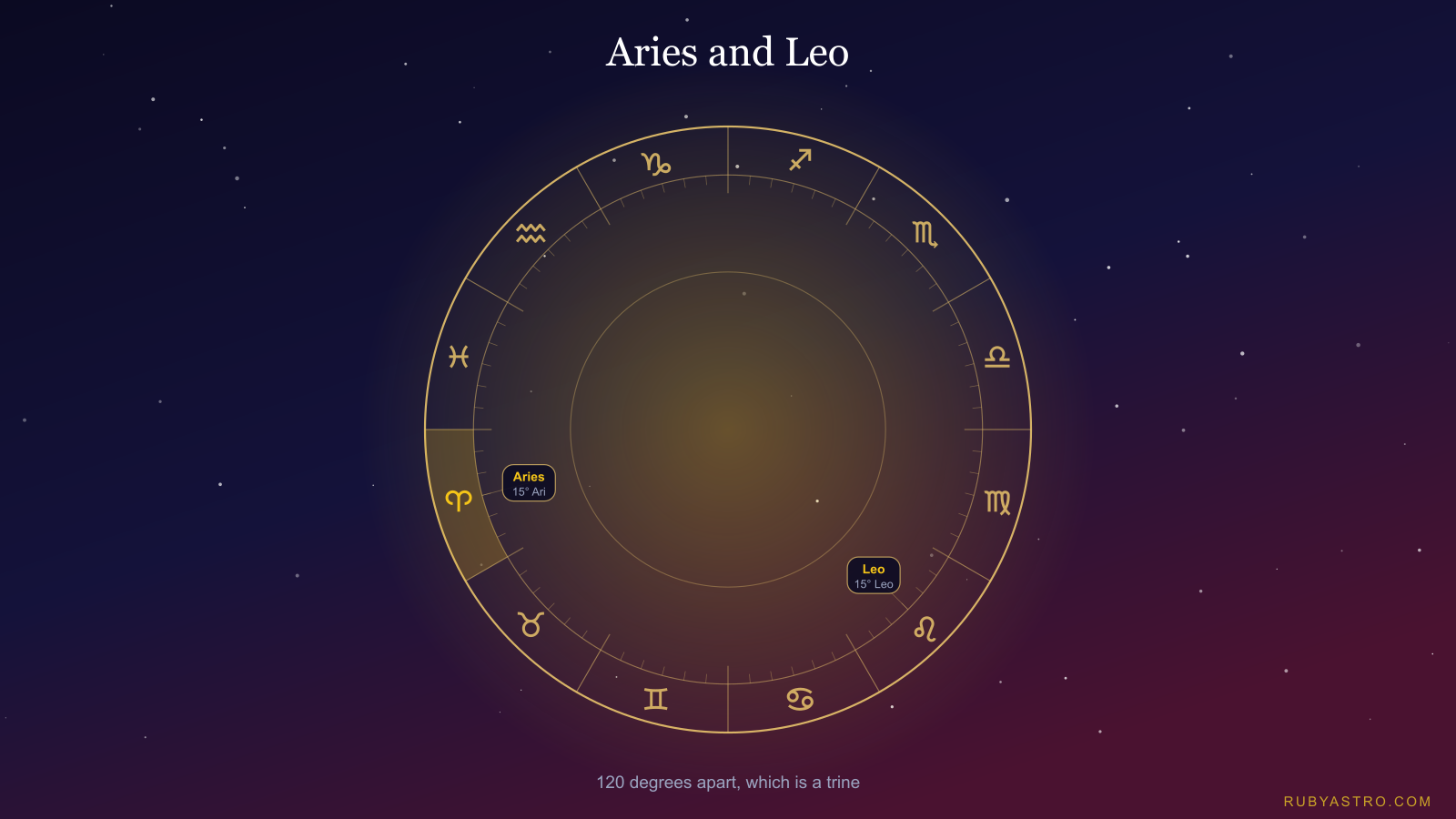
Aries and Leo are a trine, 120 degrees apart. Here is what that structure genuinely means, what strains, and why comparing two Sun signs is the weakest form of this.
Before any of that is useful, the caveat that most compatibility pages leave off: comparing two Sun signs is the weakest form of this technique. It uses one placement out of roughly forty, and it ignores the Moon, Venus, Mars and the rising sign, which between them do most of the actual work in a relationship. What follows is genuinely true about the structure between these two signs. It is not a verdict on two people.
Aries sits at position 1 in the zodiac and Leo at position 5, which puts them 120 degrees apart. In astrology that distance is itself the relationship. It is not a metaphor: the same angle between two planets in one chart means the same thing, and it is read the same way.
| Aries | Leo | |
|---|---|---|
| Element | Fire | Fire |
| Mode | Cardinal | Fixed |
| Ruler | Mars | the Sun |
| Keyword | I am | I will |
| Known for | direct, competitive and quick to start | warm, generous and proud |
| Blind spot | starts more than it finishes | needs the room to notice |
The most comfortable pairing in the zodiac. You want roughly the same things in roughly the same way, and the relief of that is not nothing.
Two fire signs burn hot and fast. Decisions get made quickly and regretted at the same speed.
One of you is cardinal and the other is fixed, so you are not even working on the same part of the problem. One starts, the other holds. That division of labour is a strength when it is named and a grievance when it is not.
Trines are so easy that they rarely grow. Shared element also means shared blind spot, and neither of you will spot it, because it looks normal from where you are both standing.
In practice the recurring argument is shaped by two blind spots meeting. Aries starts more than it finishes. Leo needs the room to notice. Those two habits tend to trigger each other, and almost every repeated row in this pairing is a version of that.
Three places the structure above actually shows up, rather than in the abstract.
Smooth, and sometimes so smooth it does not register as a beginning. Shared element means very little has to be negotiated, and these often start as something else, a friendship or a working relationship, before anybody notices.
Cardinal meeting fixed: Aries wants it resolved now, while Leo will not move off the position. Those are different complaints about the same conversation, which is why each of you thinks the other is the difficult one.
This is where the easy aspects are tested. Nothing in the structure forces growth, so these pairings last well and can quietly stop developing. What keeps them alive is usually something outside the relationship that both people are committed to.
Four placements do more work in a relationship than the Sun does. The first three only need a birth date; the fourth needs a birth time, and so does knowing which part of each person's life the other one lands in.
Comparing those properly is called synastry, and it is a different technique from reading two Sun signs against each other.
They are a trine, 120 degrees apart, which is one of the easier structures. Compatibility is not decided by Sun signs alone, though: the Moon, Venus, Mars and rising sign matter more.
4 signs, which is 120 degrees, forming a trine.
Usually a version of the same thing: Aries starts more than it finishes, while Leo needs the room to notice. Those two habits set each other off.
It is the weakest form of the technique. It uses one placement out of about forty and leaves out the Moon, Venus, Mars and the rising sign, which do most of the work. It is a real structure, but it is a small part of the picture.
RubyAstro writes about astrology for reflection and self-understanding. Nothing here is medical, legal or financial advice, and none of it is a prediction of events. Read our full disclaimer.
TarotThe Emperor means structure, authority, boundary. What it means upright and reversed, the four ways readers handle reversals, and the Aries attribution the Golden Dawn gave it.
 Love & Relationships
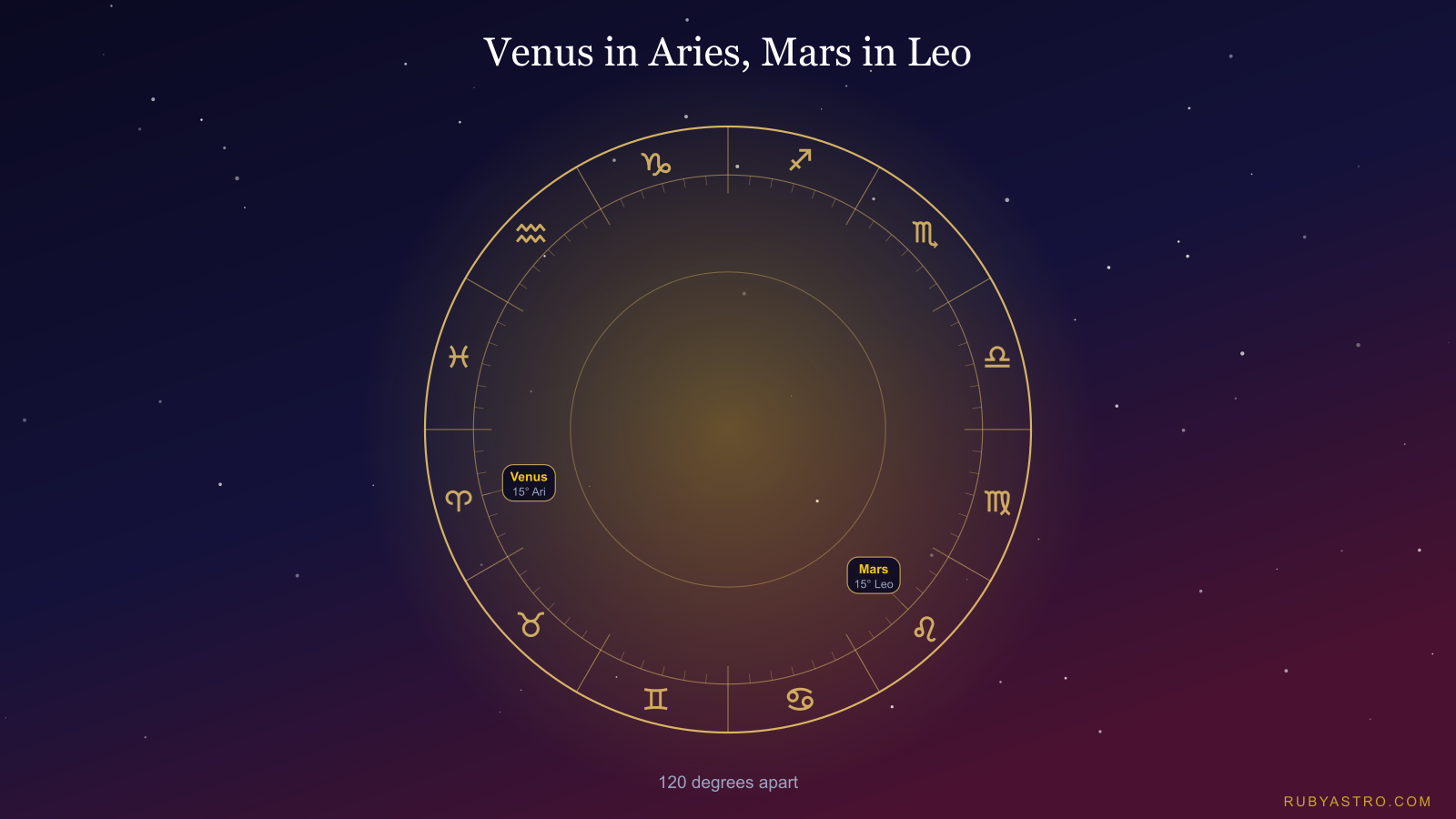
Venus in Aries is drawn to directness. Somebody who says what they want on the first evening rather than the fourth, and Mars in Leo goes after it with confidence and a certain amount of theatre. The two signs are four signs apart, which is what decides whether the wanting and the chasing agree.
 Love & Relationships
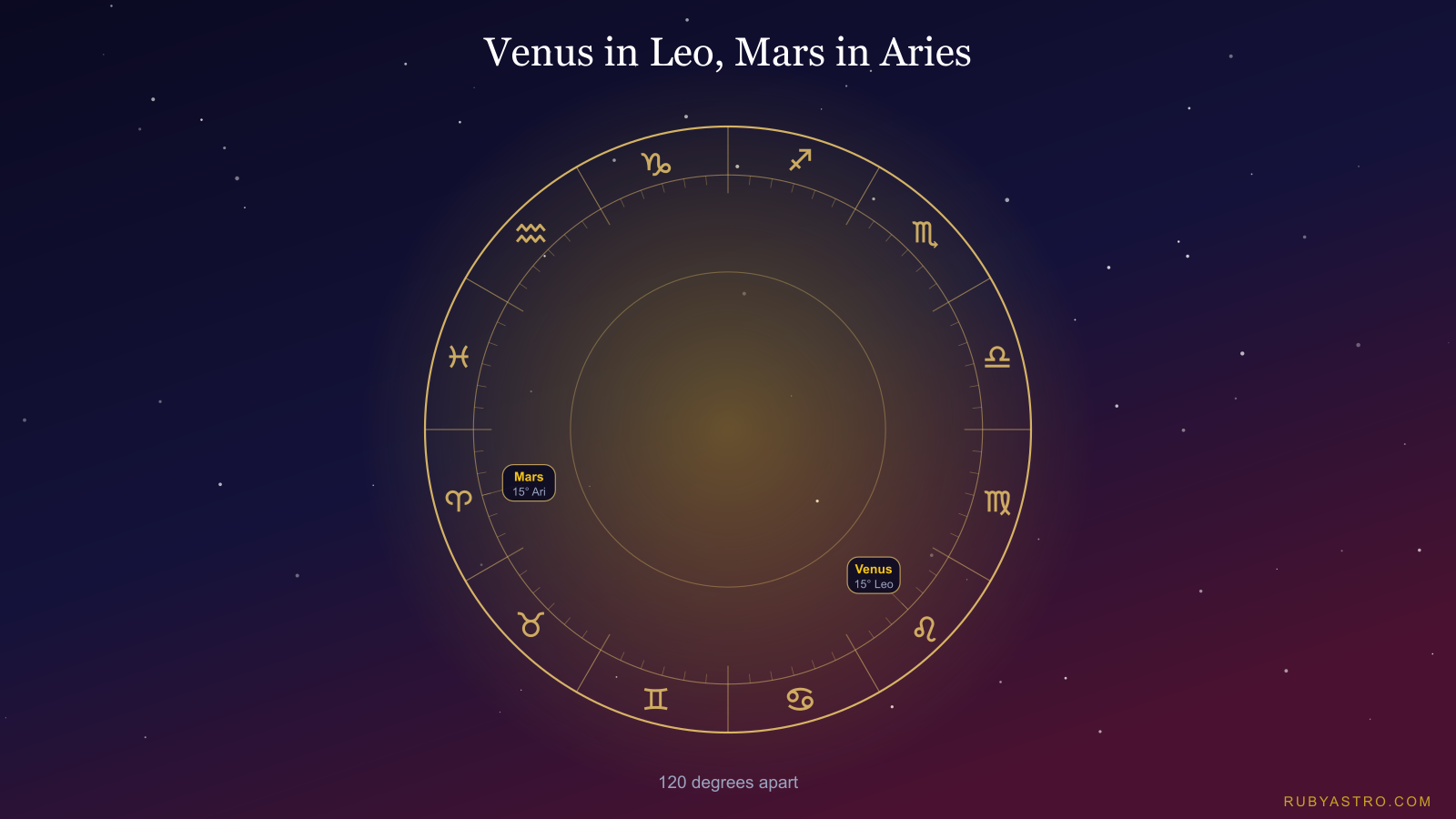
Venus in Leo is drawn to warmth and confidence. Somebody who is glad to be seen with you, and Mars in Aries goes after it directly and at speed. You ask, early, and you do not spend long wondering. The two signs are four signs apart, which is what decides whether the wanting and the chasing agree.
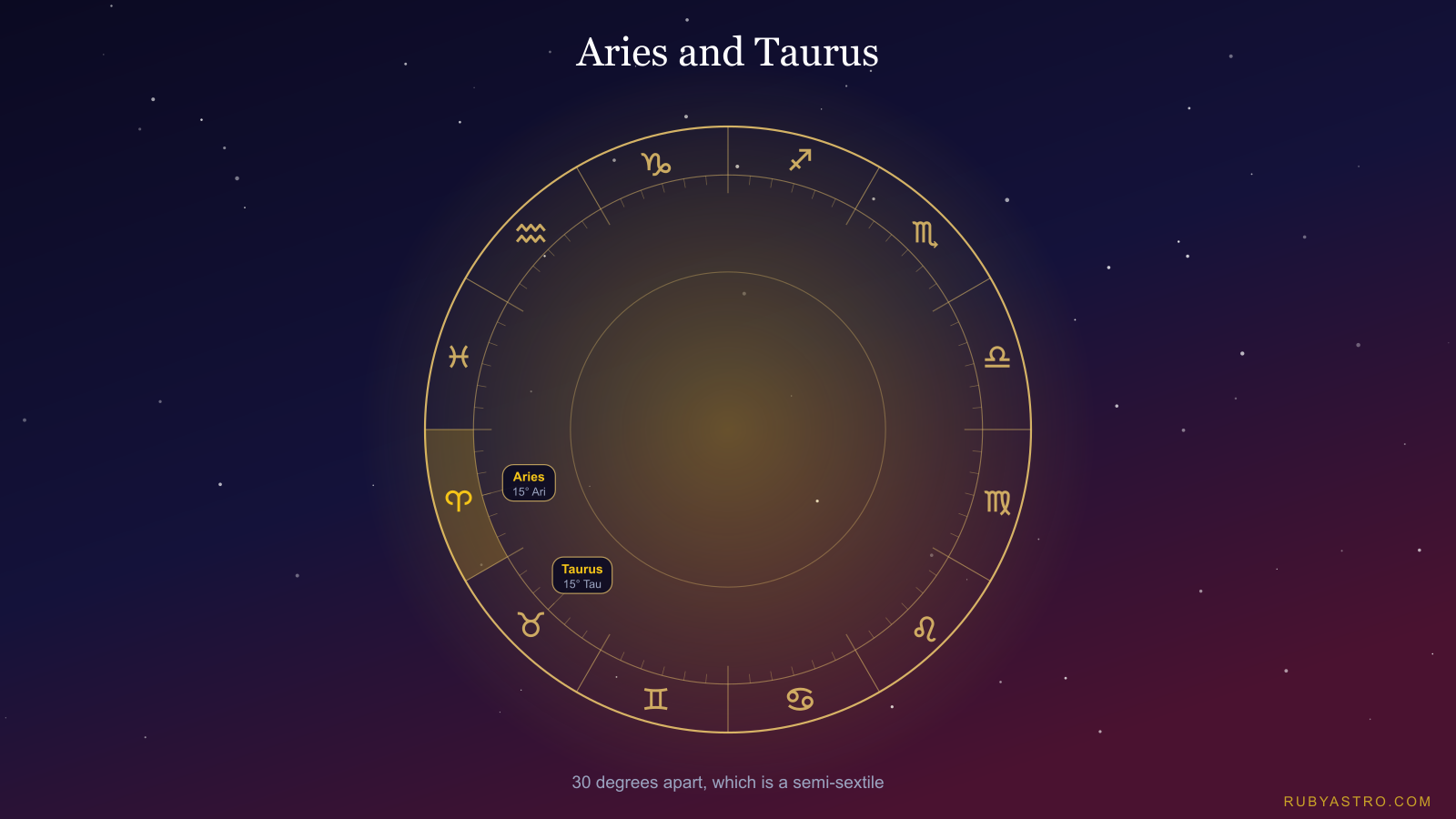 Compatibility
Aries and Taurus are a semi-sextile, 30 degrees apart. Here is what that structure genuinely means, what strains, and why comparing two Sun signs is the weakest form of this.
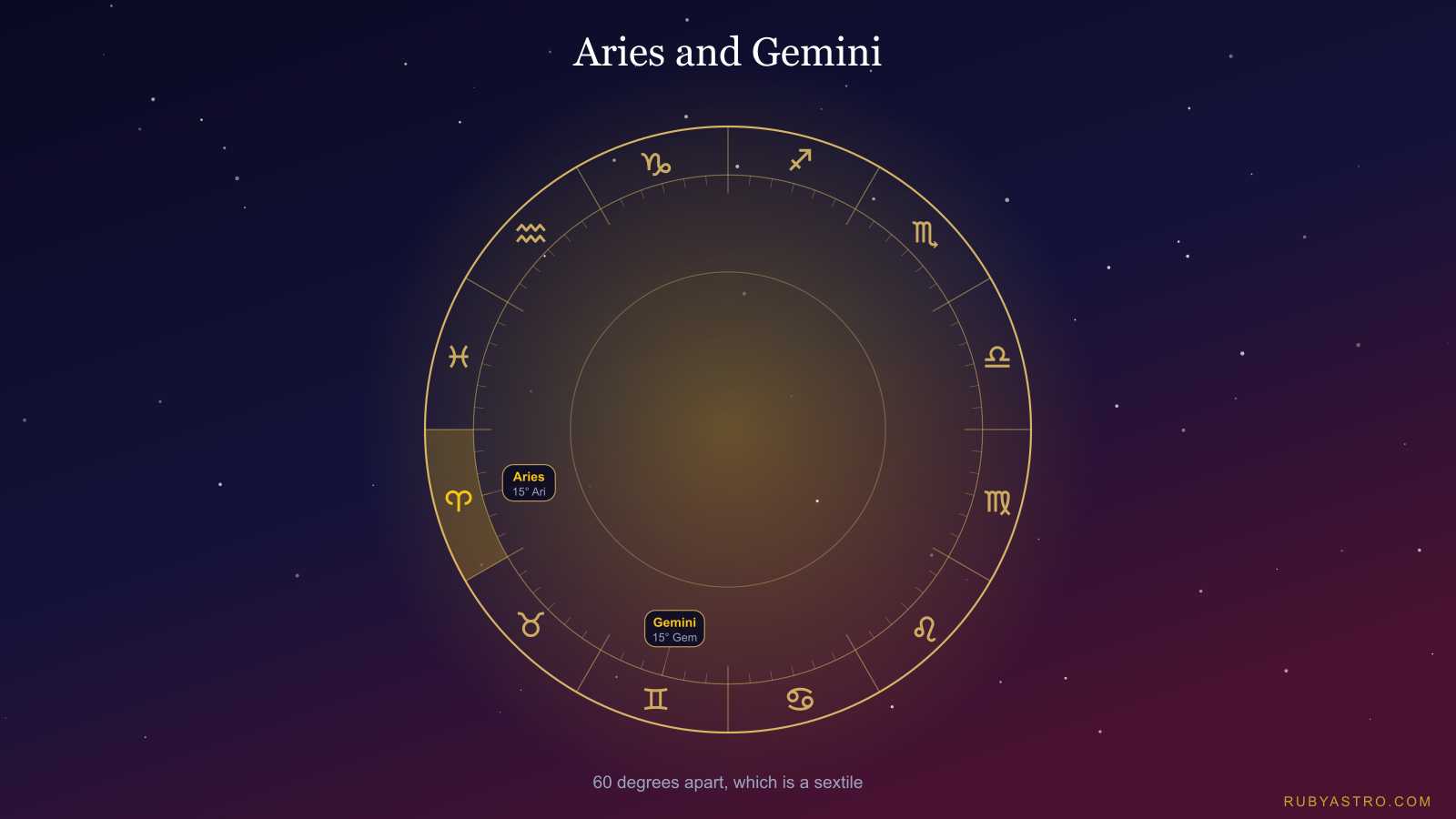 Compatibility
Aries and Gemini are a sextile, 60 degrees apart. Here is what that structure genuinely means, what strains, and why comparing two Sun signs is the weakest form of this.
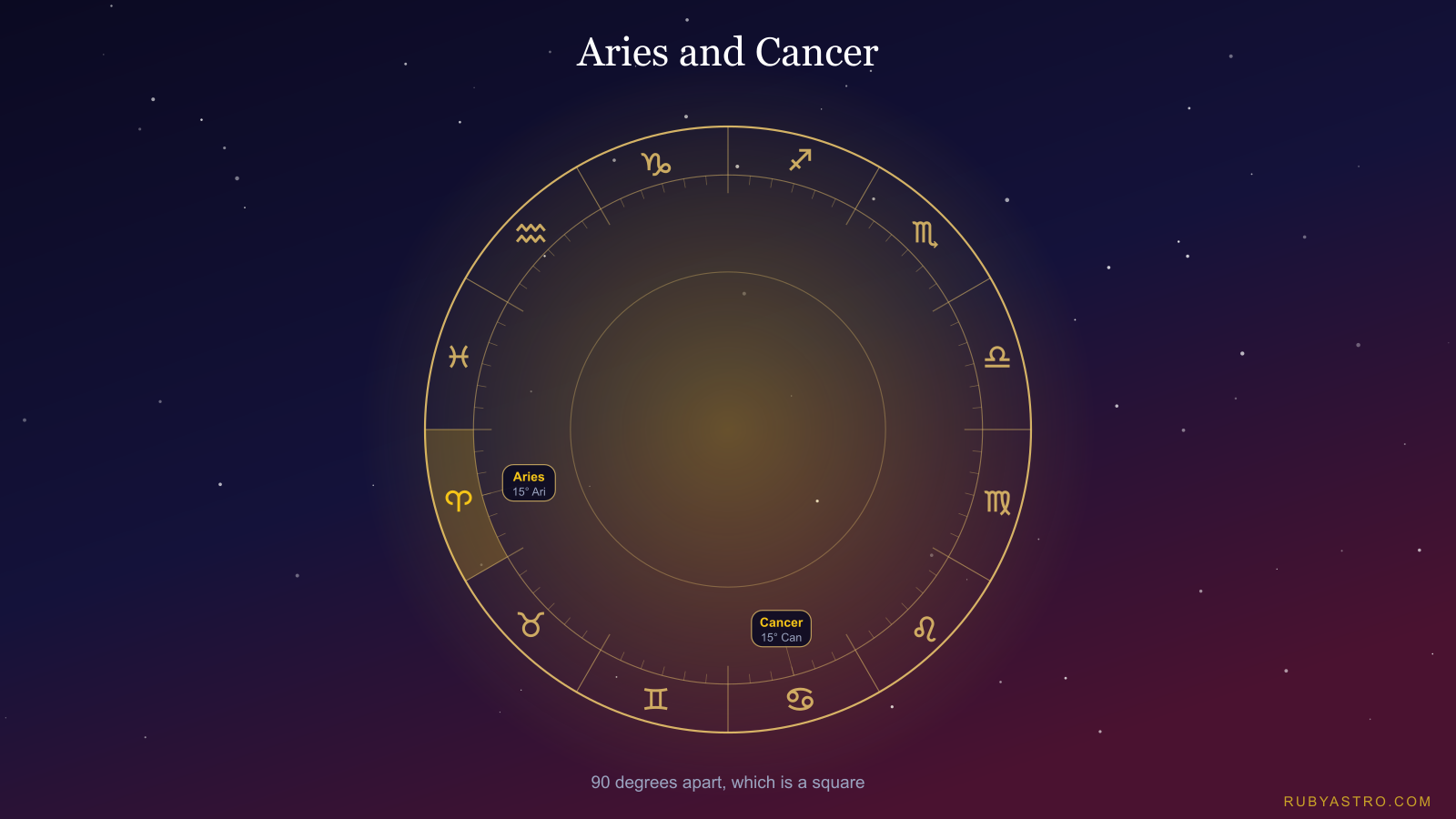 Compatibility
Aries and Cancer are a square, 90 degrees apart. Here is what that structure genuinely means, what strains, and why comparing two Sun signs is the weakest form of this.